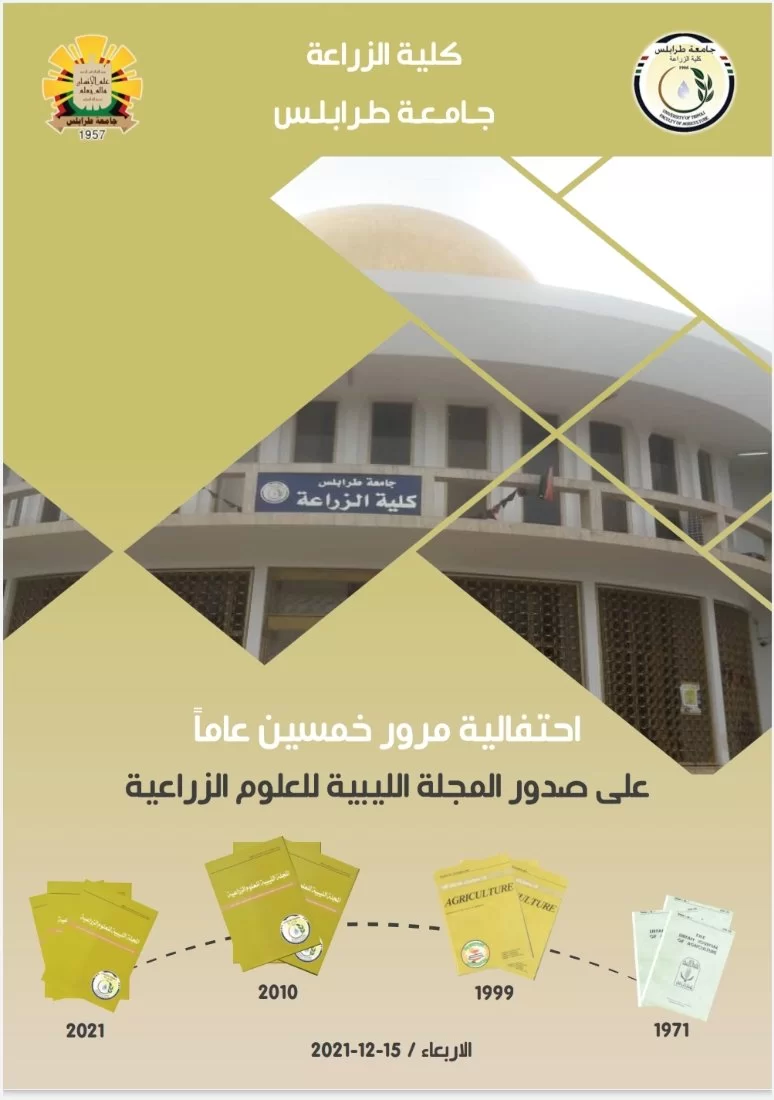
كلية الزراعة طرابلس

المزيد ...

حول كلية الزراعة طرابلس

حقائق حول كلية الزراعة طرابلس

نفتخر بما نقدمه للمجتمع والعالم

253

المنشورات العلمية

184

هيئة التدريس

522

الطلبة

0

الخريجون

من يعمل بـكلية الزراعة طرابلس

يوجد بـكلية الزراعة طرابلس أكثر من 184 عضو هيئة تدريس

staff photo

د. يونس ضو زايد الزليط

Younes Ezlit has an extensive background in the areas of irrigation, soil physics, and root zone salinity. He has strong interest in the use of the saline water resources in irrigation. He has good experience in modeling water and solute movement within the root zone under sodic and saline conditions. He has previously been involved with researches investigating water productivity, salinity, and sodicity and soil structure stability with a number of institutions, namely ICARDA, CRC IF, NCEA, and SARDI. His PhD research work aimed to investigate soil structure stability and mange using of high sodic and saline water in irrigation

منشورات مختارة

بعض المنشورات التي تم نشرها في كلية الزراعة طرابلس

انتاج خريطة زراعية رقمية باستخدام نظم المعلومات الجغرافية لشعبية الجفارة

أجريت هذه الدراسة بشعبية الجفارة الواقعة شمال غرب الجماهيرية بغرض إعداد قاعدة بيانات رقمية باستخدام نظم المعلومات الجغرافية وتقنيات الاستشعار عن بعد نظرا للأهمية الجغرافية والسكانية لهذه الشعبية ،حيث اشتملت الدراسة على شقين الأول الشق الحقلى : تم فيه حفر خمس قطاعات بالتربة الأكثر انتشارا بمنطقة الدراسة بعمق لايقل عن 150 سم وتم أخد عينات التربة من القطاعات المدروسة بسمك 20 سم أجريت عليها التحاليل الطبيعية والكيميائية ومقارنتها بنتائج الدراسة الروسية والتى أجريت عام 1980 بغرض التعرف على التغيرات البيدولوجية بعد مرور أكثر من عقدين من الزمن حيث أظهرت نتائج التحاليل لهذه القطاعات أنه لاتوجد أى تغيرات تذكر نظرا لسيادة مناخ الجاف وشبه الجاف وكذلك مناخ البحر المتوسط بالمنطقة فإن معدلات التكوين بمنطقة تعتبر بطيئة جدا ،فيما عدا ارتفاع نسبة الصوديوم المتبادل حيث ورد فى الدراسة الروسية أن هذه النسبة تكون منخفضة فى هذه القطاعات كما بينت الخريطة التصنيفية للتربة بالمنطقة أن الترب السائدة هى الترب الحديثة التكوين ، الشائعة ، الجافة ،النمودجية ، كما ينحصر القوام في هذه الترب في القوام الرملي، وبينت الخريطة الجيولوجية أن مادة أصل هذه الترب عبارة عن رواسب ريحية، وتم إنتاج خريطة تصنيف التربة رقميا وخرائط غرضية منها خريطة ملوحة التربة ،خريطة أعماق التربة ،خريطة مدى ملائمة التربة لأغراض الرى, خريطة مدى ملائمة التربة للمحاصيل الزراعية، حيث بالإمكان تحديث البيانات ودراسة التغيرات التي تطرأ عليها مستقبلاً بسهولة ويسر،الثاني الشق المكتبى : فقد تم إنتاج خريطة رقمية موضح عليها أهم مراكز الخدمات الزراعية وذلك باستخدام نظام تحديد المواقع GPS الذى يعتمد على تعريف الإحداثيات الجغرافية بهدف تأسيس القاعدة المعلوماتية وتم رصد كل من المشاتل ، المشاريع الزراعية ، مخازن الحبوب ، مصارف زراعية ، جمعيات زراعية ، معاصر زيتون ،وحدات بيطرية ، مراكز الشرطة الزراعية ، وقد لوحظ أن هناك نقص فى بعض مراكز الخدمات الزراعية رغم الأهمية الزراعية لهذه المنطقة ،أما فيما يخص بالموارد المائية لمنطقة الدراسة فهى تعتمد بدرجة الأولى على المياه الجوفية وبتالى لابد من إيجاد مصادر بديلة لأن هذا المصدر معرض للنضوب نتيجة للاستهلاك الزائد بدون بديل، وأخيرا يمكن القول بأن قاعدة بيانات التربة تتيح إمكانية الحصول على كافة المعلومات التي تهدف إلى تحسين عملية إعداد الخرائط الأرضية بشكل يوفر استخدامها لتحقيق أغراض متعددة. Abstract This study was conducted at Shabiat Al-Jfara which is located northwest of the Jamahiriya with an object of preparing digital database using the Geographical Information System (GIS) and remote sensing techniques because of the geographical and population importance of this Shabia. The study included two parts; the first is the field part where five profiles were dug to represent the most common soils in the shabia. Soil samples from each 20 cm thickness were taken from the studied profiles, physically and chemical analysis were conducted to compare with the results of the Russian study that carried out in 1980 to detect any pedagogical changes after during the last 29 years. The results of the analyses showed no any notable changes because of the dominance of the arid and semiarid climates as well as the Mediterranean climate at this area. In which very slow processes have taken place except the increase in the percentage of the exchangeable sodium where the Russian study indicated that this percentage was low in these profiles. The soil classification map of the region showed that the most dominant soils are the Typic Torriorthents. The texture of these soils is confined in the sandy texture where the geological map indicated that the original material of these soils is Eolian deposits in nature. The soil classification map digitally produced with orther thematic maps were such as soil salinity map, soil depths map, soil irrigation suitability map and soil agricultural crops suitability for irrigation map . In this case maps and data could be updated regularly in the future. The second part of this study is the office part where a digital map was produced indicating the most important agricultural service centers using the Global Positioning System (GPS) in order to establish the informatics base. The nurseries, the agricultural projects, the grain silos, the agricultural banks, the agricultural associations, the olive mills, the veterinary units and the agricultural police stations were all stored digitally. It was observed that there was a lack in some agricultural service centers despite the agricultural importance of this area. Regarding the water resources at the study area, it depends at the first place on the ground water, so alternative sources must be found because the existing resources are subject to depletion because of the excessive consumption without compensation. Finally, it can be said that the soil database provide the possibility to obtain all the information that aimed to optimize the process of preparing land maps in a form that facilitate its use to serve multiple purposes.
نعيمة عمر المزوغي الشامخ (2009)
Publisher's website

تقدير البخر بواسطة أحجام مختلفة من اللايزيمترات و مقارنته بالمعلومات المناخية

أجريت التجربة في مزرعة كلية الزراعة جامعة الفاتح بطرابلس خلال عام كامل من (21/5/2006)إلى (30/5/2007) بهدف تقدير البخر بواسطة ثلاثة أحجام من اللايزيمترات الموضوعة في ثلاثة أماكن وهي الصوبة و الهواء الطلق و الظل وبعد تجميع التربة و تجفيفها وبواسطة ميزان حساس تم وزن التربة ووضعت في كل ليزيمتر التربة المقدر له و من قطر وطول كل ليزيمتر و الكثافة الظاهرية و السعة الحقلية للتربة تم تحديد حجم الماء المضاف لكل ليزيمتروتم قياس الوزن قبل عملية الري و من تم إضافة الماء اللازم لري كل ليزيمترو تم قياس الوزن يوم بعد يوم بواسطة ميزان حساس وعلى أساس هذا الفرق نقوم بإضافة ماء الري إلي اللايزيمترات وتم أخذ البيانات المناخية و هي كمية المطر و درجة الحرارة و الرطوبة النسبية و سرعة الرياح من مركز الأرصاد الجوية للايزيمترات الموضوعة في الهواء الطلق و في الظل و قياس درجة الحرارة بواسطة جهاز الترمومتر و الرطوبة النسبية بواسطة جهاز Hygrometre للايزيمترات الموضوعة في الصوبة و من خلال النتائج المتحصل عليها من قياس معدل متوسط التبخر اليومي والتحليل الإحصائي الذي أجري علي النتائج علي مدار السنة وجد أن هناك تأثير معنوي ( عند مستوى المعنوي 5٪ ) بين أحجام اللايزيمترات أي أن معدل التبخر اليومي من اللايزيمترات الصغيرة الحجم أكبر من اللايزيمترات المتوسطة و الكبيرة الحجم علي التوالي أي أن معدل التبخر يقل كلما زادت المساحة السطحية للايزيمترات وهناك تأثير معنوي ( عند مستوى المعنوي 5٪ ) بين الأماكن الموضوعة فيها اللايزيمترات إي أن معدل التبخر اليومي للايزيمترات الموضوعة في الهواء الطلق أكبر من اللايزيمترات الموضوعة في الظل و الصوبة علي التوالي و من معادلة اتزان الطاقة توضح أن قيمة معدل البخر و النتح القياسي تتوافق مع قيمة متوسط معدل التبخر من اللايزيمترات أي أن كلما زادت المساحة السطحية للايزيمترات قل معدل البخر و أصبح أقرب من البخر و النتح القياسي المقدر بطريقة معادلة اتزان الطاقة. Abstract The Experiment was conducted at the farm of collage of agriculture university of Elfateh for aperiod of one year starting May 21- 2006 and ending May 30 – 2007. The aim was estimating evaporation using three small lysimeter with different sizes(a inside diameter 7-10.5-14.9 cm) and located of glass house, open and under shade, soil sampels was collected, dride and weighed by sensitive balance. The weight of the soil was estimated by knowing, the volume of each lysimeter, soil bulk density and soil field capacity used to estimate the amount of water added to each lysimeter. The volume of water conducted was add to each lysimeter to reach the field capacity every two days the lysimeter weight and the amount of water lost by evaporation and drainage was added to reach the field capacity.Rainfall record , air temperature , relative humidity and wind speed for the open area was collected from the near station , Hygrometer and thermometer used on site in the green house for humidity and temperature record . The results and the analysis of data at level 5 % show asignifecant difference between sizes, the rate of evaporation decrease as the surface area of the lysimeter increase, concerning the location of the lysimeter, at the level of 5 % significant difference was clear, the evaporation rate for the lysimeter in the open was higher the evaporation rate for the lysimeter under shade higher than the lysimeter in the green house. Comparing the average evaporation from the lysimeter with the results of energy balance equation, the evaporation from the lysimeter less than the one from the equation and this indicate that the rate of evaporation increase as the surface area of lysimeter increase and get close to the rate of evaporation from the energy balance equation.
كريمة خليل التركي (2009)
Publisher's website

Assessment of spatial and temporal variations of soil salinity using remote sensing and geographic information system in Libya

Soil salinity is one of the most important issues in arid and semi arid regions, which is directly linked to desertification and land degradation. Several studies related to soil and water salinity assessment, and mapping were conducted in Libya using traditional methods. However, they covered only the time of measurements and did not address the dynamic nature of salinity process. In addition, they lack cost and time effectiveness. Therefore, there is pressing need to use a high tech method that is cost, time and labor effective to assess the change in soil salinity in north- west of Libya. The aim of this paper is to identify the change in saline soils (Sehbkha) using Remote Sensing (RS) and geographic information system (GIS) techniques. Land Sat Satellite images data were acquired for 29 years (1972-1987-2001) to assess the pattern of change. The result revealed that there was a decrease saline soils area ( Sbehbka). Keywords: Libya, GIS, Remote Sensing, Soil, Soil Salinity, Sebkha. arabic 17 English 109
Hamdi Zurqani, Bashir Nwer, Azzeddin Elhawej(12-2012)
Publisher's website