faculty of Education Tripoli

More ...

About faculty of Education Tripoli

The Faculty of Education - Tripoli is one of the oldest faculties of the University of Tripoli. It was replaced by the Higher Institutes for Teacher Education in 1998-1999. However, in 2004/2005, Faculties of Teacher Preparation were established in various Libyan universities. Further, in 2008-2009, it was renamed to be the College of Education - Tripoli, to return to what it was, a long-standing educational monument under the name of Faculty of Education - Tripoli.

It dates back to the mid-sixties of the last century, that is, nearly a century, as it was established under the name of the Higher Teachers College in conjunction with the UNESCO in 1965 and the UNESCO ensured the provision of a number of experts to the college. In 1967, the Faculty joined the Libyan University at that time. In 1970, it was decided to change its name to become the College of Education. The College of Education moved to several places in the city of Tripoli throughout its long history.

Facts about faculty of Education Tripoli

We are proud of what we offer to the world and the community

167

Publications

185

Academic Staff

2790

Students

0

Graduates

Programs

Major

...

Details
Major

...

Details
Major

...

Details

Who works at the faculty of Education Tripoli

faculty of Education Tripoli has more than 185 academic staff members

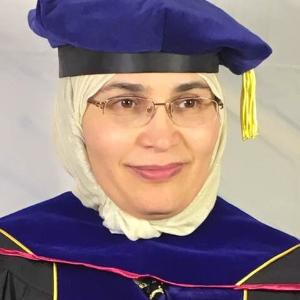
staff photo

Dr. najat ammar hasan alhmmali

نجاة الهمالي هي أحد أعضاء هيئة التدريس بجامعة طرابلس منذ 2006-06-13 ،وهي تعمل حاليا بكلية التربية بطرابلس في قسم اللغة العربية و الدراسات الإسلامية ،على درجة أستاذ مساعد ، ولها العديد من المنشورات العلمية في مجال تخصصها ( الأدب و النقد العربي الحديث ).

Publications

Some of publications in faculty of Education Tripoli

Literature Review on the Use of First Language During Second Language Writing

The paper discusses how L2 writers use their L1 while writing in L2. It investigates L1use in L2 by exploring the results of ten studies that examined it from different perspectives and in different contexts. By introducing the results of L1 use by L2 writers,ESL/EFL teachers will play a great role by helping students use their L1 positively andavoid the negative impacts of L1 use. This kind of research is of significance because thestudied research results showed that further research is needed in this area. This reviewwill provide a basis for ideas to investigate L1 use in L2 writing.The paper focuses on an important skill in English language teaching which is writing.The focus of the paper is L1 use which has been considered as taboo. This would targetthe interest of most of HLT audience, especially writing teachers. The main mission is tointroduce the role of L1 use in L2 writing. This paper reviews the second language (L2)writers’ use of the first language (L1) while composing in the second language (L2) inten studies. Those studies looked at three proficiency groups that included adult high- proficient, intermediate, and low-proficient writer’s use of L1. The results indicated thatL1 is used frequently while writing in L2 by translating, language-switching, and backtracking. It was also noticed that L1 use had positive effects on L2 text. arabic 11 English 66
Entisar ALi Hadi Elsherif(12-2012)
Publisher's website

Most Common and Reliable Traits for Fusion of Biometrics

Biometrics technologies have been around for quite some time and many have been deployed for different applications all around the world, ranging from small companies' time and attendance systems to access control systems for nuclear facilities. Biometrics offer a reliable solution for the establishment of the distinctiveness of identity based on "who an individual is", rather than what he or she knows or carries. Biometric Systems automatically verify a person's identity based on his anatomical and behavioral characteristics. Biometric traits represent a strong and undeviating link between a person and his identity, these traits cannot be easily lost or forgotten or faked. Since biometric systems require the user to be present at the time of authentication. Some biometric systems are more reliable than others, yet biometric systems are neither secure nor accurate, all biometrics have their strengths and weaknesses. Although some of these systems have shown reliability and solidarity, work still has to be done to improve the quality of service they provide. In this paper we present the most common and reliable known biometric systems suitable for Multimodal Biometrics Fusion, providing highly efficient and secure systems, showing their strengths and weaknesses and also presenting technologies in which may have great benefits for security applications in the near future.
Abdulmonam Omar Ahmed Alaswad, Ihab Meftah Elfituri, Fawzia Elhashmi Mohamad(0-2014)
Publisher's website

Hamza, A., & Ho, W. C. (2020). Updates on seabirds of the northern Seribuat Islands, Pahang, Malaysia. Marine Ornithology, 48, 1-7.

Because of a lack of systematic surveys since the 1950s, information on seabird diversity and the status of seabird colonies along the east coast of Peninsular Malaysia is mostly outdated. The Seribuat Archipelago is composed of many islands, which are located off Pahang state in the north and Johor state in the south. The northern section of the archipelago was surveyed during July-September 2017 to document active seabird colony sites and to assess species richness and the potential threats facing these colonies. Seven islands were found to host significant numbers of terns (Black-naped Terns Sterna sumatrana, Bridled Terns Onychoprion anaethetus, Greater Crested Terns Thalasseus bergii, Lesser Frigatebirds Fregata ariel, and other bird species. We provide details of each site and its suitability for seabirds. Pulau Labas and Pulau Tokong Bahara have the highest species richness (five species each) followed by Pulau Tokong Burung and Pulau Gut (four species each). Tokong Burung (made up of three islands) hosts the largest colony of Bridled Terns in the region, with more than 10 000 pairs estimated, making it one of the largest colonies of the species in Southeast Asia. Egg harvesting by local fishermen, human disturbance, marine litter, and oil pollution are the main threats to seabirds in the Seribuat Archipelago. We make recommendations regarding measures needed for further protection of the area.
Abdulmula Abdumagid Alhadi Hamza(4-2020)
Publisher's website

Journals

Journals published by faculty of Education Tripoli

Documents you Need

faculty of Education Tripoli Video Channel

Watch some videos about the faculty of Education Tripoli

See more

faculty of Education Tripoli in photos

faculty of Education Tripoli Albums