Department of Chemistry

More ...

About Department of Chemistry

Facts about Department of Chemistry

We are proud of what we offer to the world and the community

34

Publications

7

Academic Staff

135

Students

0

Graduates

Programs

Major

...

Details

Who works at the Department of Chemistry

Department of Chemistry has more than 7 academic staff members

staff photo

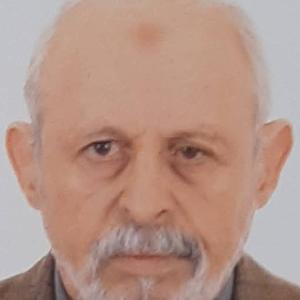
Dr. RAGIAB ALI MOKHTAR ISSA

رجب علي المختار عيسى هو احد اعضاء هيئة التدريس بقسم الكيمياء بكلية التربية طرابلس. يعمل السيد رجب المختار بجامعة طرابلس كـمحاضر منذ 2013-10-07 وله العديد من المنشورات العلمية في مجال تخصصه

Publications

Some of publications in Department of Chemistry

A Comparison between Three Organic Solvents in Extracting Essential Oils from Fresh and Dry Leaves Of Salvia Officinalis L

Salvia officinalis L. is a Mediterranean species, naturalized in many countries. The composition of essential oil isolated from Salvia officinalis L, wild growing in Libya, was analyzed. In this study, essential oils from fresh and dry leaves of Salvia officinalis L, Libya, were extracted with ethanol, hexane or chloroform as solvents using Soxhlet apparatus and the extracts were analyzed using gas chromatography/mass spectrometry method. Each solvent showed differences in the extraction yields between fresh and dry leaves. Physical constants of the extracts were shown variation in color, viscosity, density, PH and percentage of production between fresh and dry leaves for each solvent. GC-MS results showed that ethanol could extract the most compounds compared to hexane and chloroform from both fresh and dry leaves. In total 41, 28 and 31 compounds were identified in the essential oils of fresh and dry leaves of Salvia officinalis L using ethanol, hexane or chloroform respectively. For each solvent the number of compounds extracted from dry leaves was bigger than the number extracted from fresh leaves. arabic 33 English 104
ABUBAKER A BASHIR ATRROG, abdunnaser mohamed mohamed megrahi, Fathia Mousa H Altalhi(4-2018)
Publisher's website

Spectrophotometric determination of iron in dietary supplements in Libyan market

In most cases dietary supplements especially in Libya are consumed without prescriptions and the public has very limited any awareness of their health risk. The lack of quality control on numerous brands of dietary supplements in pharmacies of Libya today may result in a serious health problem. The aim of this study is to determine the iron content using a fast and accurate method for quality control of some imported dietary supplements, based on spectrophotometric measurement of iron after complexation with 1, 10-phenanthroline in an acidic medium. Eight types of vitamin supplementary tablets were randomly collected from the Libyan market and analyzed for the iron content. The analysis showed an average value of 61mg Fe/pill for the range of 40.07-112.63 mg Fe/pill. Results showed that 75% of the samples were lower in iron content than that recorded on the dietary products.
Ragiab A. M. Issa(4-2020)
Publisher's website

Determination of Lead and Cadmium Concentration in Different Samples of Tea and Coffee Circulating in the Libyan Market

The study focused on determining the levels of lead and cadmium in some samples of the best-selling and popular tea and coffee among people in Tripoli city-Libya during the years 2018-2019. Atomic Absorption Spectroscopy (AAS) has been used to determine the concentrate of cadmium and lead ions in different 17 tea samples, and 11 coffee samples. The mean values of cadmium and lead in (mg/kg) in tea samples as follows: The highest value for cadmium was found in Libton tea sample 0.260 ? 0.017, while the lowest value was found in Alkoozi red tea and Alfrdous tea samples 0.037 ? 0.006, with the overall mean was 0.119 ? 0.054. The highest value for lead was found in Alkoozi green tea sample 2.153 ? 0.012, while the lowest value was found in Alzahra tea sample 0.187 ? 0.002, with the overall mean was 1.118 ? 0.612. The results show that there are no significant differences in the values of lead in all coffee samples, which ranged from 1.23 to 1.62 mg/kg with the overall mean was 1.277 ? 0.358, except Sheikh Hbahanbelend coffee sample 0.271? 0.002 mg/kg. While the cadmium concentration in coffee samples ranged from 0.022 to 0.064 mg/kg, with the mean value 0.0514?0.0012. From these results can be noticed that coffee samples have about 11 times higher concentration of cadmium than tea, whereas the concentration of lead in tea is about 22 times higher than that in coffee samples.
ezuldeen mohammed abraheem aboushalloua(1-2022)
Publisher's website

Documents you Need