كلية الطب البيطري

المزيد ...

حول كلية الطب البيطري

تأسست كلية الطب البيطري عام 1975م كأول كلية للطب البيطري في ليبيا. تعد الكلية من قلاع العلم و المعرفة الهامة بجامعة طرابلس ومؤسسة علمية تلبي إحتياجات المجتمع من الأطباء البيطريين وتساهم في دعم الإقتصاد الوطني من خلال العناية بصحة الحيوان وزيادة الإنتاج الحيواني والمحافظة على صحة الإنسان وحماية البيئة.

حقائق حول كلية الطب البيطري

نفتخر بما نقدمه للمجتمع والعالم

194

المنشورات العلمية

86

هيئة التدريس

245

الطلبة

23

الخريجون

البرامج الدراسية

ماجستير أمراض الدواجن
تخصص أمراض الدواجن

يُنفذ هذا البرنامج من خلال دراسة مقررات دراسية، بحيث لا يقل عدد وحداتها عن (24) وحدة دراسية، وأن لا تزيد عن (30) وحدة دراسية على مدى 3 فصول، بالإضافة إلى إنجاز رسالة بحثية...

التفاصيل

ماجستير أمراض الاسماك
تخصص أمراض الاسماك

يُنفذ هذا البرنامج من خلال دراسة مقررات دراسية، بحيث لا يقل عدد وحداتها عن (24) وحدة دراسية، وأن لا تزيد عن (30) وحدة دراسية على مدى 3 فصول، بالإضافة إلى إنجاز رسالة بحثية...

التفاصيل

من يعمل بـكلية الطب البيطري

يوجد بـكلية الطب البيطري أكثر من 86 عضو هيئة تدريس

staff photo

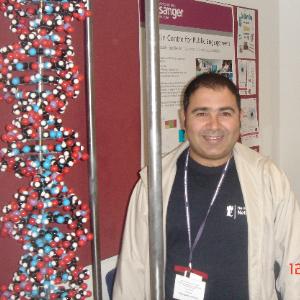
أ.د. صلاح محمد محمد الزوي

صلاح الزوي هو احد اعضاء هيئة التدريس بقسم الاحياء الدقيقة والطفليات بكلية الطب البيطري. يعمل السيد صلاح الزوي بجامعة طرابلس كـأستاذ منذ 2005-02-13 وله العديد من المنشورات العلمية في مجال تخصصه

منشورات مختارة

بعض المنشورات التي تم نشرها في كلية الطب البيطري

Alkaloids rich extracts from brown algae against multi-drug resistant bacteria by distinctive mode of action.

Algal alkaloids are widely used for their pharmacological properties as antimicrobial agents. This study determined the antibacterial activities of algal alkaloid-rich extracts against isolates of multidrug-resistant Staphylococcus aureus and enterohaemorrhagic Escherichia coli (EHEC) O157, as well as the probable mode of action underlying their antibacterial effect. The total alkaloids were extracted from two Libyan brown algae, namely Sargassum hornschuchii and Cystoseira compressa and tested against six different isolates from the bacteria mentioned above using the agar-well diffusion method, and their mode of action on isolates was evaluated by several bacterial physiological indicators, including intracellular potassium ion efflux and nucleotide leakage. Also, the extracts' hemolytic activity was assessed as an indicator of their cytotoxicity on red blood cells. Although not to the same extent, both alkaloid extracts presented antibacterial activities against all tested isolates with no evidence of bacterial regrowth. The alkaloid extract from S. hornschuchii exerted the best effect on bacteria growth with minimum inhibitory concentration values ranging between 125 and 500 mg/mL. The results showed that the alkaloid extracts significantly induced a distinct release of nucleotide and potassium ions out of the cell membrane, indicating that they cause a change in the fluidity or permeability or both of the cell membrane. Moreover, the results revealed that there were very low cytotoxic effects. Therefore, algal alkaloids may contribute to the development of potential antibacterial agents in the future.
Salah M. Azwai(1-2021)
Publisher's website

Identification of phenolic compounds, antibacterial and antioxidant activities of raisin extracts

In this study, antibacterial, antioxidant and phenolic compounds of raisin extracts was evaluated. Different solvent extraction methods were utilized to extract phenolic compounds from raisin. The phenolic compounds of raisin extracts was determined using HPLC and three compounds were found, catechin, quercetin and rutin. The antibacterial activity of the acetonic extract was tested against four bacterial pathogens viz. Staphylococcus aureus, Pseudomonas aeroginosa, Salmonella typhimurium and Escherichia coli using both disk diffusion and minimum inhibitory concentration (MIC) methods. The acetonic extract exhibited the highest activity against Staphylococcus aureus with zone of inhibition of 14mm and the MIC of 25 mg/ml. However, there was a little activity against E. coli and S. typhimurium. The methanolic extract showed good antioxidant activity as indicated by 2,2-diphenyl-1-picrylhydrazyl free radical assay (DPPH). In conclusion, raisin contains potent phenolic compounds and their application might function as promising natural preservative and antimicrobial agents in food industry and also good antioxidant food that helps to minimize the risk of degenerative diseases. arabic 11 English 86
Abdulgader Dhawi Alfitouri Dhawi(1-2021)
Publisher's website

Successful Anatomical Access for Surgical Removing of the Distal Fracture of Splint Bones in Thoroughbred Horses (Case Study)

Poor performance in athletic horses due to musculoskeletal affections is very common in Libya. Two mature thoroughbred horses suffering from poor performance and history of moderate degree forelimb lameness were admitted to the Aswany Private Equine clinic in Tripoli, Libya. The study is aiming for presenting a simple, time effective, cost effective surgical procedure to treat distal simple splint bone fracture in thoroughbred horses. Horses were examined thoroughly for the common muscle, hoof, and tendons affections. A progressed unilateral left forelimb swelling involving the lateral distal part of the fourth metacarpal bones was noticed. Three radiographs were taken to each horse including latero- medial, dorsolateral-palmaromedial, and palmarolateral-dorsomedial views to assess both splint bones. The radiographs showed that there is a complete fracture involving the distal extremity (button) of the fourth metacarpal bones. Surgical excisions of the fractured part of the splint bones have been decided to treat these horses. To precisely locate the site of the bone fragments, 1.5 mm stainless steel wires were placed over the distal part of splint prior to taking the radiographs. The surgical sites were aseptically prepared, and the horses were then sedated via intravenous injection of xylazine at a dose rate of 1 mg/kg body weight. The site of surgical incision was infiltrated with 2% lidocaine. The bone fragments were then removed after performing the surgical incision. The sharp end at the distal end of the proximal part of the splint bone was then smoothening with a scissor. The surgical incisions were then routinely closed and the post-operative care and radiographs were taken. The surgical incision made complete healing within two weeks. Both horses were followed up for up to three years post-operation, and they did well compared to what has been done in other studies. We concluded that the surgical technique used to treat the two horses with splint bone fracture enrolled in the current study is a simple and effective procedure. arabic 19 English 106
Mohamed H. Abushhiwa, Osma K Sawesi, Khaled A. Milad, Aiman. A. Shalgum, Abdulrhman Mohamed Salah Alrtib(9-2019)
Publisher's website

قناة كلية الطب البيطري

بعض الفيديوات التي تعرض مناشط كلية الطب البيطري

اطلع علي المزيد