كلية العلوم

المزيد ...

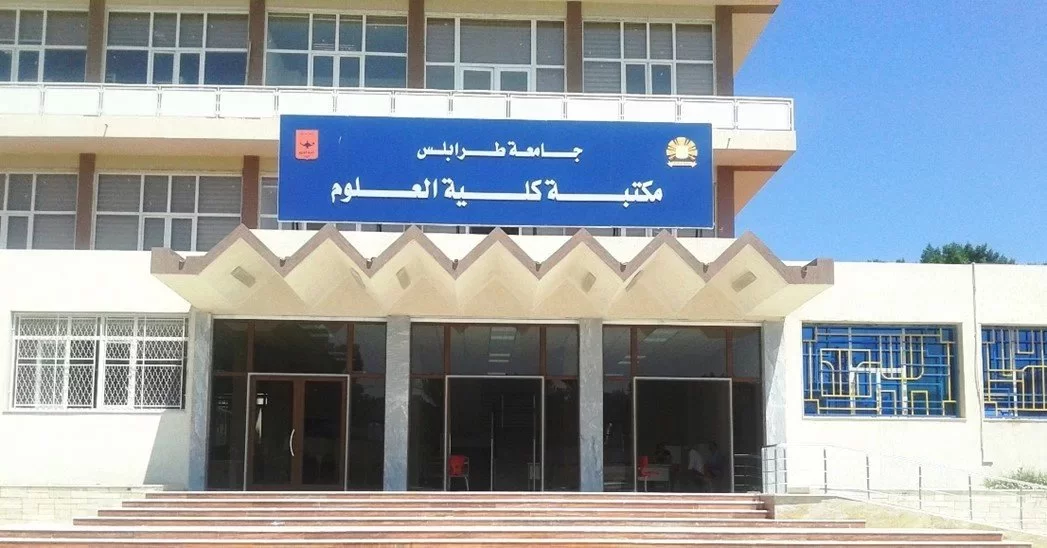
حول كلية العلوم

كلية العلوم- جامعة طرابلس هي نواة كليات العلوم ليس فقط في هذه الجامعة العريقة بل في الدولة الليبية . تضم في الوقت الحالي عشرة اقسام علمية ويجري العمل على استحداث قسم جديد Archaeology يختص بدراسة بالجانب العلمي البحثي للتراث التاريخي للشعب الليبي، وهذه الأقسام العلمية هي قسم علم الحيوان وعلم الرياضيات، وعلم الفيزياء، وعلم الكيمياء، وعلم النبات وعلم الجيولوجيا ، وعلم الحاسب الآلي وعلم الإحصاء ، وعلم الغلاف الجوي  وعلم الجيوفيزياء. عمل خريجو هذه الكلية في مختلف القطاعات منها على سبيل المثال وليس الحصر:

  • مجال النفط تنقيبا واستخراجا وتكريراً.
  • مجمعات الصناعات الكيميائية في أبي كماش وراس الانوف وشركات اللدائن إنتاجاً وتصنيعاً، و في مصانع الصابون ومواد التنظيف وغيرها.
  •  مجال التعليم وما يتعلق به من مجالات بحثية في جميع المراحل والمستويات منها التعليم المتوسط والعالي.

 لقد قاد خريجو هذه الكلية المسيرة العلمية لسنوات طويلة ولازالوا يمثّلون اللبنة الأولى في جميع كليات العلوم، وبعض الكليات الأخرى في جميع الجامعات الليبية، التي تأسست في الخمسة عقود الماضية. شمل مجال عمل خريجوها كليات الطب (في مجال العلوم الأساسية ، والكيمياء الحيوية وعلم التشريح والأنسجة والإحياء الدقيقة) وكليات الزراعة في معظم أقسامها والهندسة في المرحلة العامة وقسمي الهندسة الكيميائية والجيولوجية تحديدا، والتقنية الطبية والصيدلة وكلية الاقتصاد والآداب، وذلك من خلال برامج الدراسة الجامعية التي عملت على توفير معيدين للجامعــــــــات الأخــــــــــرى بالدولــــــــة الليبية أو توفير أعضــاء هيئة التدريس من حملة

  • تعتبر كلية العلوم من أوائل الكليات الجامعية التي تبنّت برامج الدراسات العليا بالداخل رغم طبيعة الدراسات العليا في العلوم الأساسية والتي تحتاج إلى إمكانيات تتعدى الأستاذ الكفؤ والذي هو متوفر والحمد لله في هذه المؤسسة، وذلك لان عدد كبير من الأساتذة تخرجوا من جامعات في الغرب والشرق (أمريكا، بريطانيا، أستراليا، معظم الدول الأوروبية) هذه الجامعات مشهود لها بالمستوى الأكاديمي الرفيع.
  • عمل ويعمل خريجوها أيضا في مراكز البحوث الصناعية والنووية والنفط والأحياء البحرية والتقنيات الحيوية واللدائن وغيرها من المراكز البحثية المتخصصة، وذلك بعد حصولهم على الشهادة الجامعية الأولى أو بعد حصولهم على درجات التخصص العالية والدقيقة من الداخل و الخارج .
  • إثراء الحركة العلمية البحثية في مجالات العلوم الاساسية بالدولة الليبية من خلال اصدار مجلة العلوم الاساسية المحكمة.

حقائق حول كلية العلوم

نفتخر بما نقدمه للمجتمع والعالم

170

المنشورات العلمية

267

هيئة التدريس

1831

الطلبة

686

الخريجون

البرامج الدراسية

من يعمل بـكلية العلوم

يوجد بـكلية العلوم أكثر من 267 عضو هيئة تدريس

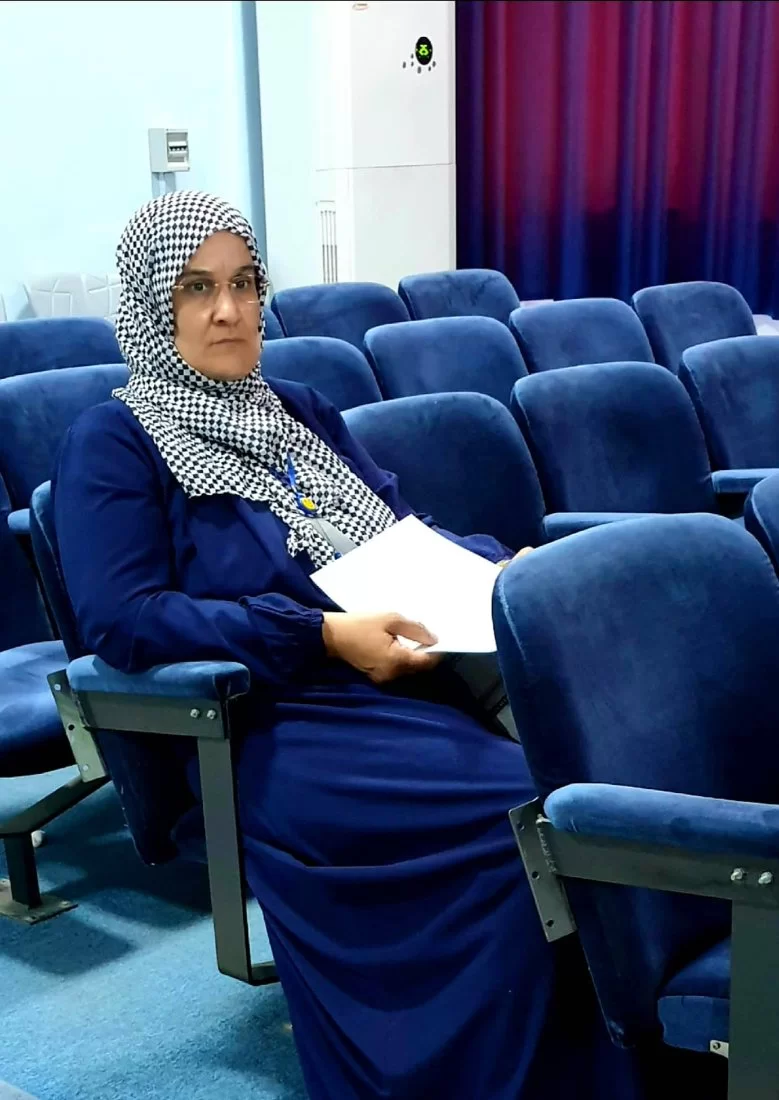
staff photo

أ. مني شعبان سالم عكريم

مني هي احد اعضاء هيئة التدريس بقسم الرياضيات بكلية العلوم. تعمل السيدة مني بجامعة طرابلس كـمحاضر مساعد منذ 2016-01-31 ولها العديد من المنشورات العلمية في مجال تخصصها

منشورات مختارة

بعض المنشورات التي تم نشرها في كلية العلوم

Linear Fractional Programming Problem Algorithms and Applications

هذا البحث يقدم دراسة حول مسألة البرمجة الخطية الكسرية التي تعتبر أحد أهم الركائز العلمية في مجال صنع القرار.تناولنا في دراستنا هذه الخصائص التي تتميز بها مسألة البرمجة الخطية الكسرية ودراسة تفصلية لبعض الخوارزميات المستخدمة لحلها، مع إعطاء مثالاً توضيحياً لكل خوارزمية، كما قمنا بدراسة وتحليل الطريقةdevelopment method The complement مدعمة بالنتائج التي حصلنا عليها ومن أبرزها عيوب هذه الطريقة، كما ناقشنا بعض الصور المختلفة للمسألة القرينة لهذه المسألة. Abstract This study offers a study about the problem of linear fractional programming (LFP) which is considered as one of the most important scientific supports in the field of decision-making. In this study, we handled the characteristics distinguishing the problem of the linear fractional programming and a detailed study of some algorithms used to solve it with giving an illustrative example for each algorithm, and we performed a study and analysis of The complement development method which supported by the results obtained from the examples that tell the defects of this method. We also discussed some of the various forms of the dual problem of LFP.
مبروكة مسعود الفقي (2011)
Publisher's website

Formation Evaluation of Well Logs Analysis Approach for Nubian Sandston Reservoir Development within East of Sirt Basin

مؤخرا أصبح نظام مخزن البيانات (Data warehouse (DW)) مهم جدا لصانعيِ القرار. فمعظم الاستفسارات في مخزن البيانات ( Data warehouse (DW)) كبيرة معقدة ومتكررة. إمكانية إجابة هذه الاستفسارات بكفاءة هي مسألة صعبة في بيئة مخزن البيانات (Data warehouse (DW). نظام مخزن البياناتِ تم تحسينه لعمل التقارير وتحليل المعالجة المباشرة هذا التطبيقِ (on line analytical processing (OLAP) ) يُزوّدُ المستعملين بالأدواتِ لاستفسارات مخازنِ البياناتِ بشكل متكرر لكي يَتّخذوا قراراتَ أفضلَ وأسرعَ. هناك العديد مِنْ الحلولِ لتَسْريع معالجة الاستفسار مثل الجداول الملخصة (summary tables )، الفهارس (indexes )، الآلات المتوازية (parallel machines)، الخ؛ الجداول الملخصة يكون أدائها جيد عندما تكون الاستفسارات محدّدة مسبقا، ولكن عندما يظهر استفسار غير مُتوّقع، النظام يقوم بمسحَ ( scan )، جلب (fetch )، وتصنيف ( sort ) البياناتَ الفعليةَ، وهذا يقلل من ك كفاءة الأداءِ؛ إضافة إلى ذلك فعندما يتغيّر الجدول الأساسي ُ، يجب إعادة حساب الجداول الملخصة؛ الجداول الملخصة تَدعم الاستفسارات المتكرّرةَ المعروفةَ فقط، و في أغلب الأحيان تَتطلّبُ وقتَ أكثرَ ومساحةَ أكبرَ مِنْ البياناتِ الأصليةِ. لأننا لا نَستطيعُ بِناء كُلّ الجداول الملخصة المحتملة، و اختيار أي البيانات لبناء الجداول الملخصة لها صعب؛ وعلاوة على ذلك، تلخيص البياناتَ تَخفي معلوماتَ ثمينةَ؛ باستخدام الفهارس (indexes ) الفعالة، تم معالجة استفسارات معقّدةَ أسرع بكثيرَ مِنْ معالجتها باستخدام فهارس أقل فاعلية؛ لكن أداءَ الاستفسار يَعتمدُ أقل على عدد الفهارس التي تم تكوينها على الجداول أكثر مِنْها على نوعِ الفهارس التي تم تكوينها على الجداول; لذا الفَهْرَسَة هي المفتاحُ لإنْجاز هذا الهدفِ بدون إضافة أجهزةِ إضافيةِ. فقط إذا تم بناء الفهارس الصحيحةِ على الأعمدةِ، أداء الاستفسارات و خصوصا الاستفسارات الغير متوقعة (ad hoc) ستتحسن. عند تكوين الفهارس هناك خصائص الأعمدة التي يجب أخذها في عين الاعتبار عند اختيار الفهارس الصحيحةِ على الأعمدةِ، حيث أن لكل عمود خصائص خاصة به مثل Cardinality وهو يمثل عدد القيم المختلفة في العمود المراد فهرسته value rangeهو مدى القيم في العمود Distribution هو عدد القيم المتشابهة في العمود الواحد؛ و في نظام مستودع البيانات (DW) هناك عدة تقنيات للفهرسة وكل نوع من أنواع الفهرسة مناسب لحالة معينة؛ وفي هذا البحث سيتم دراسة و تقييم تقنيات الفهرسة وهي B_tree index و Bitmap index؛ و من خلال دراسة تقنيات الفهرسة وتقييمها في هذا البحث سنجد أن اختيار تقنية الفهرسة المناسبة لا تعتمد على (cardinality) ولكن تعتمد على نوع التطبيق والذي يجب على أساسه اختيار نوع الفهرسة المناسب. Abstract Recently, data warehouse (DW) system is becoming more and more important for decision-makers. In order to make better and faster decisions an Online Analytical Processing (OLAP) application provides users with tools to iteratively query the DW. The information stored in a DW is obtained through many different sources. Most of the queries against a large data warehouse are complex and iterative and contain a large number of records. Such complex queries could take several hours or days to process. The ability to answer these queries quickly is a critical issue in the data warehouse environment. There are many solutions to speed up query processing such as summary tables, indexes, parallel machines, etc. The performance when using summary tables for predetermined queries is good. But it often supports only known frequent queries, and requires more time and more space than the original data. Indexing is the key to achieve this objective without adding additional hardware. If the right index structures are built on columns, the performance of queries, especially ad hoc queries will be greatly enhanced. In indexing there are characteristics of a column that need to be considered in order to select the right index structure. Each column has its own characteristics these characteristics are Cardinality data, Distribution, and value range. In data warehouse systems, there are many indexing techniques. Each indexing technique is suitable for a particular situation. In this research, we describe and evaluate a b-tree and a bitmap indexing techniques and from this research we will find out that the usage of indexes is not in fact cardinality dependent but rather application dependent.
حنان عيسي سعيد اشتوي (2009)
Publisher's website

Sedimentological Aspects of the Sarir Sandstone in Messla Oil Field, Southeastern Sirt Basin, Libya

Abstract The Sarir Sandstone in Messla Oil Field are of Lower Cretaceous ageAptian Alpian and occur in the subsurface of the eastern part of the Messla high in the southeast Sirt Basin. The Sarir Sandstone interpret as fluvial and alluvial fan deposits whereas the Lower Sarir Sandstone were deposited in a braided system as inter-channel bars. The Upper Sarir Sandstone were deposited in the meandering belt of the fluvial system. The Sarir Sandstone is on-lapping Formation and wedge out against Rakb Group. The Sarir Sandstone is unconformable overlies the Pre-Cambrian Basement and unconformable overlain by the Upper-Cretaceous Rakb Group where it is pinching (wedging) out against the Bald Basement; Messla High)). Lithostratigraphic correlations of borehole logs ((well logs)) in concession 65 suggests that deposits gradually downed a fault controlled topographic surface increased in thickness on the down-thrown side of a fault controlled the topographic surface of Pre-Upper Cretaceous Unconformity. IV M. Sc. Hassin Haweel “Sedimentological Aspects of the Sarir Sandstone in Messla Oil Field”, 2015 Core Samples record mainly sandstone units interbedded with sandstone and shale and minor streaks and the Red Shale Unit. Estimation of depositional environment has thus been made from grain size analyses using thin sections. Petrographic studies show that the Sarir Sandstone in composition from (subarkose to arkosic arenite). The Sandstones range from texturally immature to submature, however, much of the clay content is diagenetic in origin and not a function of the depositional regime. Diagenetic studies reveal a gnite complex paragenesis. During early diagenesis, the Sarir Sandstones were modified by Calcite, dolomite, and locally pyrite, diagenesis process; replacements of corroded silica by carbonates. Cementation fluvial sandstones Intrastratal dissolution and precipitation of kaolinite in the resulting pore space. Deformation of micas between more resistant grainy pre-dates one phase of quartz overgrowth, probably the carbonates.The purpose of this study was to investigate in detail the characteristics of the Sarir Sandstone in Messla Oil Field. Another aim was to find out the relation to the adjacent area. The method of this study was conducted with the review of the previousworks in Messla Oil Field; published papers, the open file of the Arabian Gulf Oil Company (AGOCO), well files for the data to be used in constructing maps, cross sections and profiles. Four cored wells (418 feet) V M. Sc. Hassin Haweel “Sedimentological Aspects of the Sarir Sandstone in Messla Oil Field”, 2015 were used for the core descriptions and cut samples that represent the Sarir Sandstone and (130) thin sections were used for the Petrographic analysis with polarized and scanning electron microscopes (SEM). On the other hand, XRD and XRF were not available. The results of the study were: Subsurface investigations including cores (conventional and side walls), petrographic analysis, and wire-line logs suggested that this formation (Sarir Sandstone) can be divided in to three main units in Messla Oil Field; these units are: The Lower Sarir Sandstone, the Red Shale, and the Upper Sarir Sandstone. In the adjacent area Sarir Formation was divided in to five members; Pre-Upper Cretaceous Member-1 unconformably overlying Pre-Cambrian Basement, and upwards; Member 2, Member 3, Member 4, and Member 5 unconformably overlain by Rakb Group. The Lower Sarir Sandstone in Messla Oil Field is characterized by the presence of gravely sandstone, gradually changes in to the Red Shale. Also, from the core descriptions plotted sheets, and the well logs it is finning upwards. The quarzitic sandstones of (the Lower and the Upper Sarir Sandstones) are considered to be the main producing horizons where quartz grains have undergone a complex diagenetic history, including: Authigenesis, quartz and feldspar overgrowths, dissolution, carbonates cementation, and replacement. The principal conclusion was that: the gravelly sandstone unit at the Lower part of the Lower Sarir Sandstone was deposited, most likely in a braided system as inter-channel bars. The sandstone unit of the Upper Sarir VI M. Sc. Hassin Haweel “Sedimentological Aspects of the Sarir Sandstone in Messla Oil Field”, 2015 Sandstone was deposited in the meandering belt of the fluvial system. The shale facies of the Red Shale unit represents a well-developed break between the Lower Sarir Sandstone and Upper Sarir Sandstone units; it also provides a good seal for the underlying sandstone of the Lower Sarir Sandstone. The nature of the shale facies, (i.e. lack of organic content, and presence of oxidizing conditions indicated by iron oxides color, indicate that they are not a significant source of hydrocarbons. On the other hand, the Rakb Shale isthe only source rock in the studied and adjacent areas.
حسين محمد علي حويل (2015)
Publisher's website

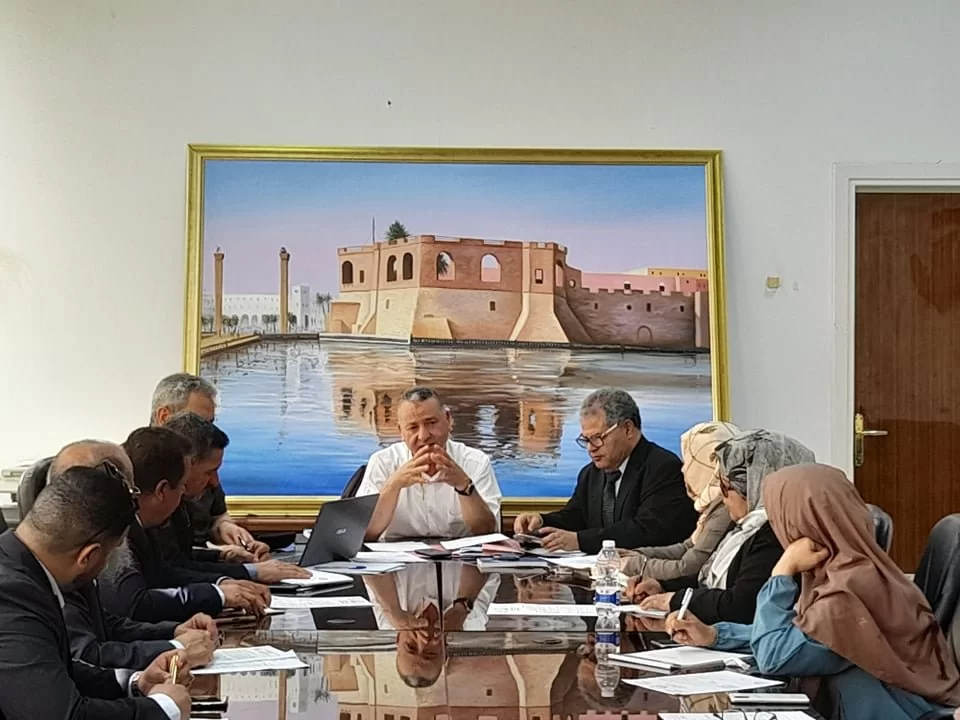
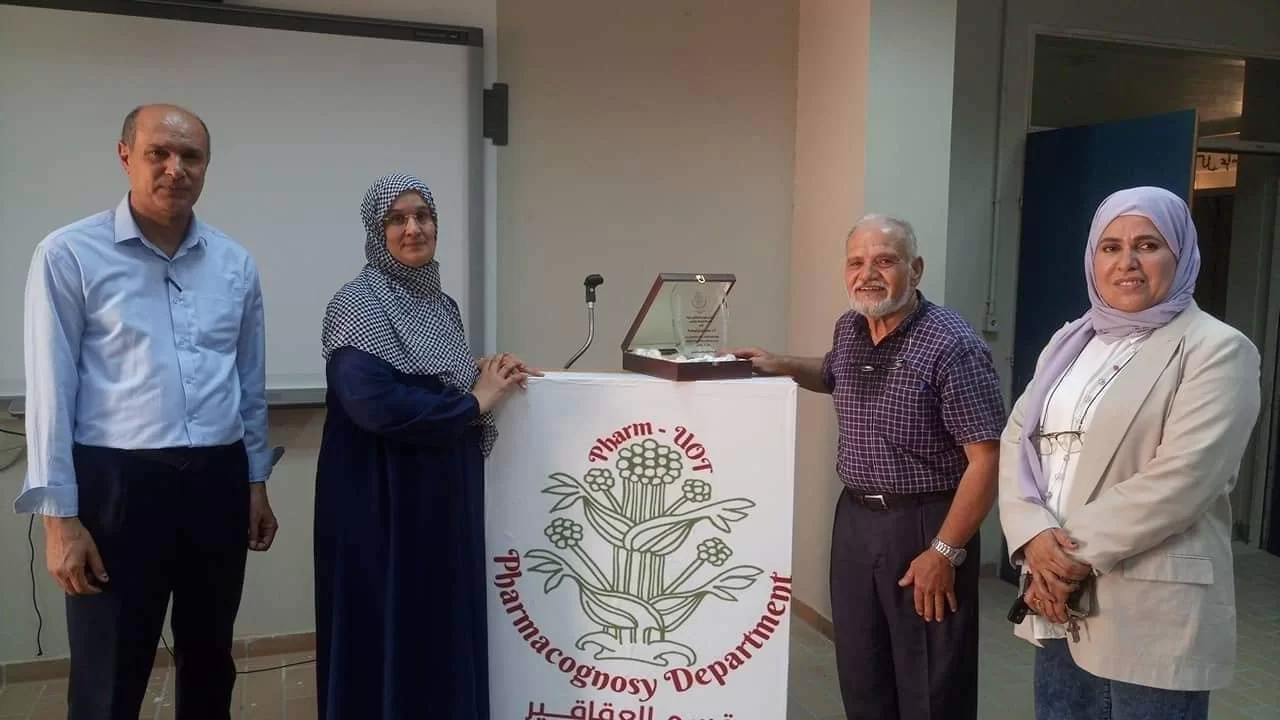
كلية العلوم في صور

الالبومات الخاصة بفعاليات كلية العلوم