كلية العلوم

المزيد ...

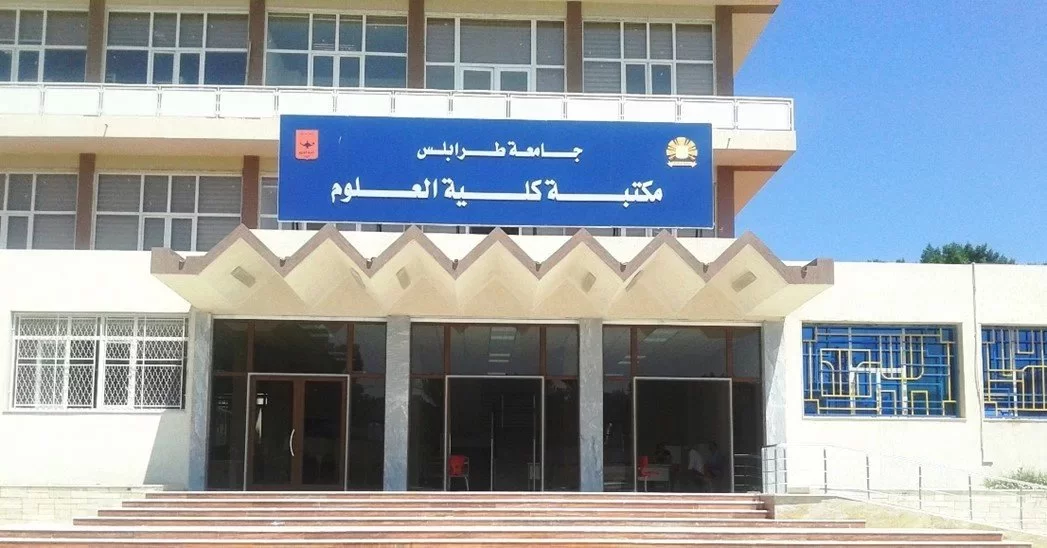
حول كلية العلوم

كلية العلوم- جامعة طرابلس هي نواة كليات العلوم ليس فقط في هذه الجامعة العريقة بل في الدولة الليبية . تضم في الوقت الحالي عشرة اقسام علمية ويجري العمل على استحداث قسم جديد Archaeology يختص بدراسة بالجانب العلمي البحثي للتراث التاريخي للشعب الليبي، وهذه الأقسام العلمية هي قسم علم الحيوان وعلم الرياضيات، وعلم الفيزياء، وعلم الكيمياء، وعلم النبات وعلم الجيولوجيا ، وعلم الحاسب الآلي وعلم الإحصاء ، وعلم الغلاف الجوي  وعلم الجيوفيزياء. عمل خريجو هذه الكلية في مختلف القطاعات منها على سبيل المثال وليس الحصر:

  • مجال النفط تنقيبا واستخراجا وتكريراً.
  • مجمعات الصناعات الكيميائية في أبي كماش وراس الانوف وشركات اللدائن إنتاجاً وتصنيعاً، و في مصانع الصابون ومواد التنظيف وغيرها.
  •  مجال التعليم وما يتعلق به من مجالات بحثية في جميع المراحل والمستويات منها التعليم المتوسط والعالي.

 لقد قاد خريجو هذه الكلية المسيرة العلمية لسنوات طويلة ولازالوا يمثّلون اللبنة الأولى في جميع كليات العلوم، وبعض الكليات الأخرى في جميع الجامعات الليبية، التي تأسست في الخمسة عقود الماضية. شمل مجال عمل خريجوها كليات الطب (في مجال العلوم الأساسية ، والكيمياء الحيوية وعلم التشريح والأنسجة والإحياء الدقيقة) وكليات الزراعة في معظم أقسامها والهندسة في المرحلة العامة وقسمي الهندسة الكيميائية والجيولوجية تحديدا، والتقنية الطبية والصيدلة وكلية الاقتصاد والآداب، وذلك من خلال برامج الدراسة الجامعية التي عملت على توفير معيدين للجامعــــــــات الأخــــــــــرى بالدولــــــــة الليبية أو توفير أعضــاء هيئة التدريس من حملة

  • تعتبر كلية العلوم من أوائل الكليات الجامعية التي تبنّت برامج الدراسات العليا بالداخل رغم طبيعة الدراسات العليا في العلوم الأساسية والتي تحتاج إلى إمكانيات تتعدى الأستاذ الكفؤ والذي هو متوفر والحمد لله في هذه المؤسسة، وذلك لان عدد كبير من الأساتذة تخرجوا من جامعات في الغرب والشرق (أمريكا، بريطانيا، أستراليا، معظم الدول الأوروبية) هذه الجامعات مشهود لها بالمستوى الأكاديمي الرفيع.
  • عمل ويعمل خريجوها أيضا في مراكز البحوث الصناعية والنووية والنفط والأحياء البحرية والتقنيات الحيوية واللدائن وغيرها من المراكز البحثية المتخصصة، وذلك بعد حصولهم على الشهادة الجامعية الأولى أو بعد حصولهم على درجات التخصص العالية والدقيقة من الداخل و الخارج .
  • إثراء الحركة العلمية البحثية في مجالات العلوم الاساسية بالدولة الليبية من خلال اصدار مجلة العلوم الاساسية المحكمة.

حقائق حول كلية العلوم

نفتخر بما نقدمه للمجتمع والعالم

170

المنشورات العلمية

267

هيئة التدريس

1831

الطلبة

686

الخريجون

البرامج الدراسية

من يعمل بـكلية العلوم

يوجد بـكلية العلوم أكثر من 267 عضو هيئة تدريس

staff photo

د. هدى محمد ابوالقاسم المريمي

منشورات مختارة

بعض المنشورات التي تم نشرها في كلية العلوم

Modeling effects of outlet nozzle geometry on swirling flows in gas turbine

Swirl stabilised combustion is one of the most successful technologies for flame stabilisation in gas turbine combustors. Lean premixed combustion systems allow the reduction of NOx coupled with fair flame stability. The swirl mechanism produces an aerodynamic region known as central recirculation zone (CRZ) providing a low velocity region where the flame speed matches the flow velocity, thus anchoring the flame whilst serving to recycle heat and active chemical species to the root of the former. Another beneficial feature of the CRZ is the enhancement of the mixing in and around this region. However, the mixing and stabilisation processes inside of this zone have shown to be extremely complex. The level of swirl, burner outlet configuration and combustor expansion are very important variables that define the features of the CRZ. The complex fluid dynamics and lean conditions pose a problem for stabilization of the flame. The problem is even more acute when alternative fuels are used for flexible operation. Therefore, in this paper swirling flame dynamics are investigated using computational fluid dynamics (CFD) with commercial software (ANSYS). A new generic swirl burner operated under lean-premixed conditions was modelled. A variety of nozzles were analysed using isothermal case to recognize the the behavers of swirl . The investigation was based on recognising the size and strength of the central recirculation zones. The dimensions and turbulence of the Central Recirculation Zone were measured and correlated to previous experiments. The results show how the strength and size of the recirculation zone are highly influenced by both the shear layer surrounding the Central Recirculation Zones (CRZ) and outlet configurations. arabic 11 English 64
Adel Diyaf, Hesham Baej, Adel Akair, Salem Adeilla, Abdurahman Kraiem(9-2018)
Publisher's website

Temporal and Spatial Evolution of Some Laser Fusion Parameters

Abstract The search for a reliable source of energy has been a challanging task to manking while conventional energy resorces are diminishing nuclear fusion, especially laser fusion, promises to be the source of the future. Experimental costs in laser fusion are astronomical and computer modeling drastically minimizes such costs and gives a chance for less fortunate Gauntries to gain insight into the scientific and technical aspects of the subject since a large portion of information involved is classified. This work deals with the spatial and temporal evolution of the laser fusion produced by different laser pulses It is based on a computer code called MEDUSA which takes into account the variation in the wavelength, power density pulse duration, target geometry and material. It assumes a target which is divided into 20 cells each of 24 urn width. Inverse-Bremsstrahlung and resonance absorption are the two main mechanisms responsible for absorption of energy from the incident laser pulse. Fusion takes place in the plasma as a result of ablation of the plasma corona where the formed shock waves compress the plasma cells and heat them. The rate of energy deposited into and radiated from the plasma ,which causes variation of the plasma internal energy, is expressed by the energy equation. This equation is transformed into a finite difference form and solved by Gauss Elimination Method to calculate the plasma parameters such as electron(T e) and ion ternperatures(Ti), pressure(P) and density(p) and the different processes of energy absorption and losses. The temporal evolution of these parameters is studied through the divisions of the pulse into chosen time steps at which the evolution is clear. The results have shown that by increasing laser power the energy deposited into and radiated from the plasma increases. The electron and ion temperatures the plasma pressure and density also increase. This is because of the geadual propagation of the shock wave from the surface of the pellet towards its center causing compression of the plasma cells. The optimum value of such parameters are obtained close to the end of the pulse where the incident laser power is maximum and so as the energy deposited into the plasma center where heating and compression causes the consumption of the whole target After the end of the pulse duration, the plasma cells coordinates expand and the plasma parameters decrease, a process known as diminishing of the plasma The effect of the laser parameters of four diffterent lasers namely CO2, KrF, Nd-glass and Ruby of 5ns, 15ns and 45ns pulse duration was studied. It was found that: (1) the maximum value of the plasma parameters decrease by increasing the pulse duration of a certain power and wavelength, (2) the maximum value of the plasma parameters increase by increasing the wavelength because of increasing the energy deposited into the plasma by resonance absorption process. At the optimum implosion time, the plasma parameters show a strong spatial variation. However, a strong temporal variation of the plasma parameters was observed at the pellet center.
هناء محمد حسن موسي (1994)
Publisher's website

A preliminary development in hybrid a-silicon/polymer solar cells

Amorphous undoped intrinsic silicon, B-doped silicon and P-doped silicon hybrid bilayer structures with poly(3-hexylthiophene) have been fabricated and their photovoltaic responses have been investigated. Open-circuit voltages and fill factors of the devices are moderate, but strongly dependent on the doping type of a-Si:H films. The highest available open-circuit voltage from the hybrid solar cells within this investigation is 1.23 V in a standard test condition. Both inorganic and organic semiconducting layers contribute to the photocurrent generation. The short-circuit currents appear to be limited by unbalanced charged carriers collected from different sides of the semiconductors, which indicates a way forward in device optimization. arabic 9 English 56
Adel Diyaf, Zhiqun He, John I.B. Wilson, Anna H.N. Lind, Ying Peng, Zhi Zhang(9-2013)
Publisher's website

كلية العلوم في صور

الالبومات الخاصة بفعاليات كلية العلوم