كلية العلوم

المزيد ...

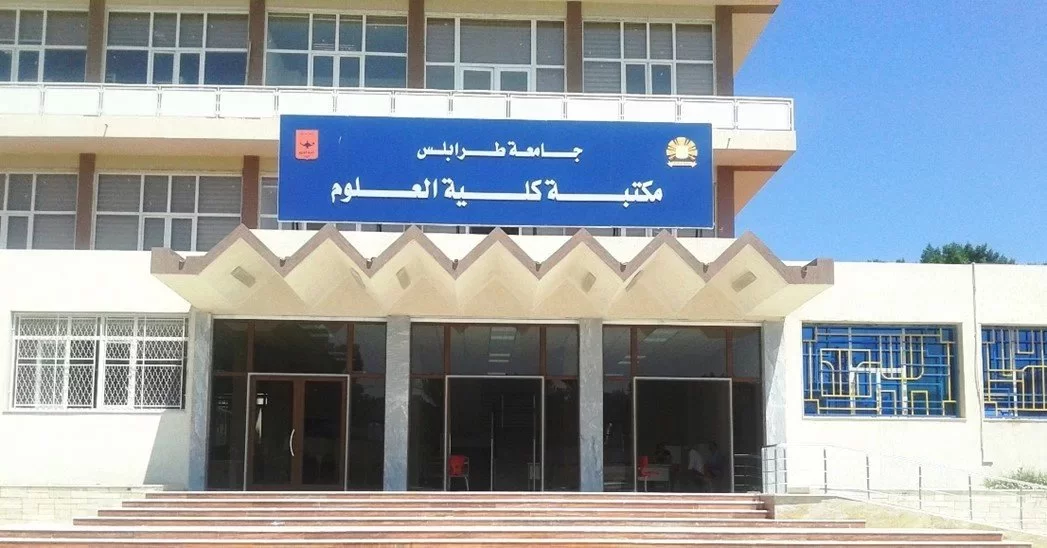
حول كلية العلوم

كلية العلوم- جامعة طرابلس هي نواة كليات العلوم ليس فقط في هذه الجامعة العريقة بل في الدولة الليبية . تضم في الوقت الحالي عشرة اقسام علمية ويجري العمل على استحداث قسم جديد Archaeology يختص بدراسة بالجانب العلمي البحثي للتراث التاريخي للشعب الليبي، وهذه الأقسام العلمية هي قسم علم الحيوان وعلم الرياضيات، وعلم الفيزياء، وعلم الكيمياء، وعلم النبات وعلم الجيولوجيا ، وعلم الحاسب الآلي وعلم الإحصاء ، وعلم الغلاف الجوي  وعلم الجيوفيزياء. عمل خريجو هذه الكلية في مختلف القطاعات منها على سبيل المثال وليس الحصر:

  • مجال النفط تنقيبا واستخراجا وتكريراً.
  • مجمعات الصناعات الكيميائية في أبي كماش وراس الانوف وشركات اللدائن إنتاجاً وتصنيعاً، و في مصانع الصابون ومواد التنظيف وغيرها.
  •  مجال التعليم وما يتعلق به من مجالات بحثية في جميع المراحل والمستويات منها التعليم المتوسط والعالي.

 لقد قاد خريجو هذه الكلية المسيرة العلمية لسنوات طويلة ولازالوا يمثّلون اللبنة الأولى في جميع كليات العلوم، وبعض الكليات الأخرى في جميع الجامعات الليبية، التي تأسست في الخمسة عقود الماضية. شمل مجال عمل خريجوها كليات الطب (في مجال العلوم الأساسية ، والكيمياء الحيوية وعلم التشريح والأنسجة والإحياء الدقيقة) وكليات الزراعة في معظم أقسامها والهندسة في المرحلة العامة وقسمي الهندسة الكيميائية والجيولوجية تحديدا، والتقنية الطبية والصيدلة وكلية الاقتصاد والآداب، وذلك من خلال برامج الدراسة الجامعية التي عملت على توفير معيدين للجامعــــــــات الأخــــــــــرى بالدولــــــــة الليبية أو توفير أعضــاء هيئة التدريس من حملة

  • تعتبر كلية العلوم من أوائل الكليات الجامعية التي تبنّت برامج الدراسات العليا بالداخل رغم طبيعة الدراسات العليا في العلوم الأساسية والتي تحتاج إلى إمكانيات تتعدى الأستاذ الكفؤ والذي هو متوفر والحمد لله في هذه المؤسسة، وذلك لان عدد كبير من الأساتذة تخرجوا من جامعات في الغرب والشرق (أمريكا، بريطانيا، أستراليا، معظم الدول الأوروبية) هذه الجامعات مشهود لها بالمستوى الأكاديمي الرفيع.
  • عمل ويعمل خريجوها أيضا في مراكز البحوث الصناعية والنووية والنفط والأحياء البحرية والتقنيات الحيوية واللدائن وغيرها من المراكز البحثية المتخصصة، وذلك بعد حصولهم على الشهادة الجامعية الأولى أو بعد حصولهم على درجات التخصص العالية والدقيقة من الداخل و الخارج .
  • إثراء الحركة العلمية البحثية في مجالات العلوم الاساسية بالدولة الليبية من خلال اصدار مجلة العلوم الاساسية المحكمة.

حقائق حول كلية العلوم

نفتخر بما نقدمه للمجتمع والعالم

170

المنشورات العلمية

267

هيئة التدريس

1831

الطلبة

686

الخريجون

من يعمل بـكلية العلوم

يوجد بـكلية العلوم أكثر من 267 عضو هيئة تدريس

staff photo

أ.د. عبد الباسط علي مفتاح ابوعزة

الاستاذ الدكتور عبد الباسط أبوعزة هو احد اعضاء هيئة التدريس بقسم الفيزياء بكلية العلوم. ويعمل بجامعة طرابلس كـأستاذ منذ 2014-03-01 ومتخصص فى الليزر والاطياف وله العديد من المنشورات العلمية في مجال تخصصه. كما تقلد العديد من المناصب الادراية وشارك فى اللجان العلمية المتخصصة كتوحيد المناهج بكليات التربية ولجنة اعتماد المواصفات الليبية بالمركز الوطني لاعتماد المواصفات والمعايير الليبية.

منشورات مختارة

بعض المنشورات التي تم نشرها في كلية العلوم

Temporal and Spatial Evolution of Some Laser Fusion Parameters

Abstract The search for a reliable source of energy has been a challanging task to manking while conventional energy resorces are diminishing nuclear fusion, especially laser fusion, promises to be the source of the future. Experimental costs in laser fusion are astronomical and computer modeling drastically minimizes such costs and gives a chance for less fortunate Gauntries to gain insight into the scientific and technical aspects of the subject since a large portion of information involved is classified. This work deals with the spatial and temporal evolution of the laser fusion produced by different laser pulses It is based on a computer code called MEDUSA which takes into account the variation in the wavelength, power density pulse duration, target geometry and material. It assumes a target which is divided into 20 cells each of 24 urn width. Inverse-Bremsstrahlung and resonance absorption are the two main mechanisms responsible for absorption of energy from the incident laser pulse. Fusion takes place in the plasma as a result of ablation of the plasma corona where the formed shock waves compress the plasma cells and heat them. The rate of energy deposited into and radiated from the plasma ,which causes variation of the plasma internal energy, is expressed by the energy equation. This equation is transformed into a finite difference form and solved by Gauss Elimination Method to calculate the plasma parameters such as electron(T e) and ion ternperatures(Ti), pressure(P) and density(p) and the different processes of energy absorption and losses. The temporal evolution of these parameters is studied through the divisions of the pulse into chosen time steps at which the evolution is clear. The results have shown that by increasing laser power the energy deposited into and radiated from the plasma increases. The electron and ion temperatures the plasma pressure and density also increase. This is because of the geadual propagation of the shock wave from the surface of the pellet towards its center causing compression of the plasma cells. The optimum value of such parameters are obtained close to the end of the pulse where the incident laser power is maximum and so as the energy deposited into the plasma center where heating and compression causes the consumption of the whole target After the end of the pulse duration, the plasma cells coordinates expand and the plasma parameters decrease, a process known as diminishing of the plasma The effect of the laser parameters of four diffterent lasers namely CO2, KrF, Nd-glass and Ruby of 5ns, 15ns and 45ns pulse duration was studied. It was found that: (1) the maximum value of the plasma parameters decrease by increasing the pulse duration of a certain power and wavelength, (2) the maximum value of the plasma parameters increase by increasing the wavelength because of increasing the energy deposited into the plasma by resonance absorption process. At the optimum implosion time, the plasma parameters show a strong spatial variation. However, a strong temporal variation of the plasma parameters was observed at the pellet center.
هناء محمد حسن موسي (1994)
Publisher's website

Improving Wear Resistance of Al and AI- 4 % Si Substrates by Laser -Assisted Surface Impregnation with Sic and Ti

Abstract Laser surface treatment of materials is one of the most effective methods of improving properties and performance of metallic articles. This technique proved its capabilities and advantages in comparison with other methods of surface treatment As an example, it has been shown that the distortion caused by this type of treament is at least one order of magnitude smaller than by that due to other techniques. Moreeover, laser beam is capable of reaching practically any point of the surface whatever it is narrow or difficult to reach by other techniques. The current work investigates the possibility of improving certain mechanical properties of both technically pure aluminum and A1-4o/oSi alloy, using ruby laser of 3 xl 05 W/cm2 power density. The surface of the investigated materials has been impregnated by SiC particles of varying size ranges, with or without firrther alloying of the surface with Titanium powder addition to the impregnated mixture. The laser treatment included coating one surface of each specimen of SiC particles by means of a binder added at a certain ratio (with or without Ti additions to the mixture). The coated surface was then subjected to the laser beam, which melted a layer I OO-150Jilll thick. Due to hydrodynamic effects the melt mixes with SiC particles and dissolves some or all of the added Ti and rapidly solidifies forming a thin layer distinct in properties from the original surface. Two groups of specimens were used in this study. The first group was treated by impregnating SiC particles of one size range with or without Ti-additions. Various numbers of laser pulses have been applied increasmg in a geometrical progression (1-2-4-8 pulses). These specimens were used for the study of the effect of varying: 1) the chemical composition of the substrate materials ;2) the number of laser pulses :and 3) the effect of Ti additions to the impregnating mixture on the microstracture and microhardness of the treated zones. The specimens of the 2nd group were coated by a square network of laser treated zones each 1.5mm in diameter. These specimens have been used to study :1) the effect of the chemical composition of the substrate material ;2) the size of the SiC particles and 3) the effect of Ti addition to the mixture on the wear perfomance of the treated specimens. Identical specimens have been used to determine the solubility of Si into the aluminum phase during the test by means of x-ray diffraction. This dissolved Si is partly responsible for the increase ID microhardness and wear resistance of the investigated specimens. The results show the positive effect of the applied treatment on the properties and preformence of technically pure AI and A-4%Si alloy. The materials microhardness within the treated zones has been increased by a factor of 2.7 and 2.4 for pure Al and Al-4%Si substrates, respectively. The microstructure of the treated zones became more homogeneous and the penetration of SiC particles into them has been increased with increasing the number of the applied laser pulses. The wear resistance of pure Al has been increased by a factor of 73.6 due to laser assisted impregnation, while that of AI-4%Si by afactor of 42.5. Wear resistance was found to increase with I) Si addition to the base metal; 2) Ti addition to the impregnated mixture, and 3) increasing the SiC particle size. This thesis is a part of a wider study that deals with surface treatment of Al and AI-Si alloys undertaken in our laboratry. Such study proved how effective the laser alloying and impregnation of such alloys in improving some of their mechanical properties which are important in industrial application, especially in internal combustion engine design.
أسماء عبد الرزاق وهرة (2002)
Publisher's website

Synthesis and Study of Schiff’s Base Ligands Derivedfrom Reaction of Benzil with Aliphatic and Aromaticamines and Their Metal Complexes with Cu(II), Ni(II),Cd(II), Pb(II), Pd(II), Hg(II), and VO2+.

Abstract Five symmetrical Schiff base ligands[four bi-dentate and one tetradentate(L3- L7)] and two un-symmetrical bi-dentate and tri-dentate (L1-L2) ligands with the Nitrogen and oxygen chromophore were isolated inpure form and good yield. The ligands were fully characterized by elemental analyses, melting point, IR, H1- &13C- NMR, and mass spectra.The Schiff bases L1 and L2 were successfully coordinated to Pd(II) and VO2+ ions respectively and these complexes were characterized using elemental analyses, IR and mass spectra. The interesting result by mass spectrum of VO2+ complex of L2 shows parent peak at 524 confirming that the formula of the complex as [VOL2(ac.ac.)2H2O] in which the complex has an octahedral geometry.The symmetrical Schiff bases (L3-L7) were also successfully coordinated to Nickel (II), Copper (II), Lead (II), Cadmium (II), and Mercury (II) ions to form their corresponding complexes. The total twenty five metal (II) XI Schiff base complexes of (L3-L7) were isolated. These complexes were characterized by elemental analyses, melting points, IR, mass spectra technique. 1H &13C-NMR Spectra in DMSO d6 for Pb, Cd, and Hg complexes show the expected number of peaks with deferent chemical shift comparing with the free ligands in the same solvent. The interesting result by mass spectrum of Ni(L7)2 complex compred with of L7 spectra shows parent peak at 977 confirming that the ligand L7 has lost one proton to give the desire complex in square planar geometry.
حميدة أحمد سالم العباني (2015)
Publisher's website

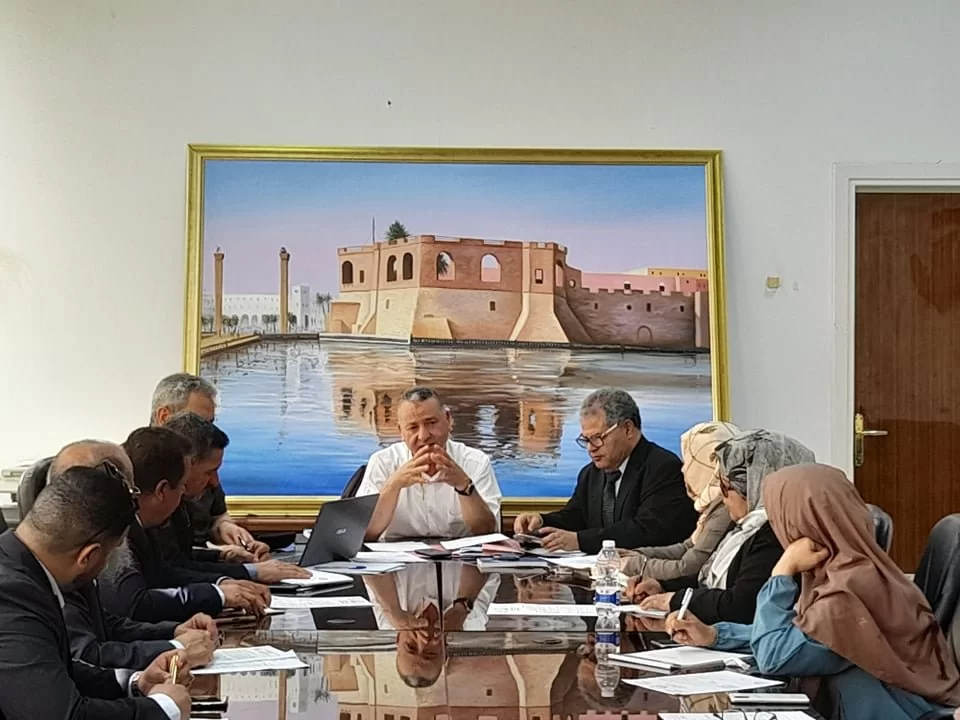
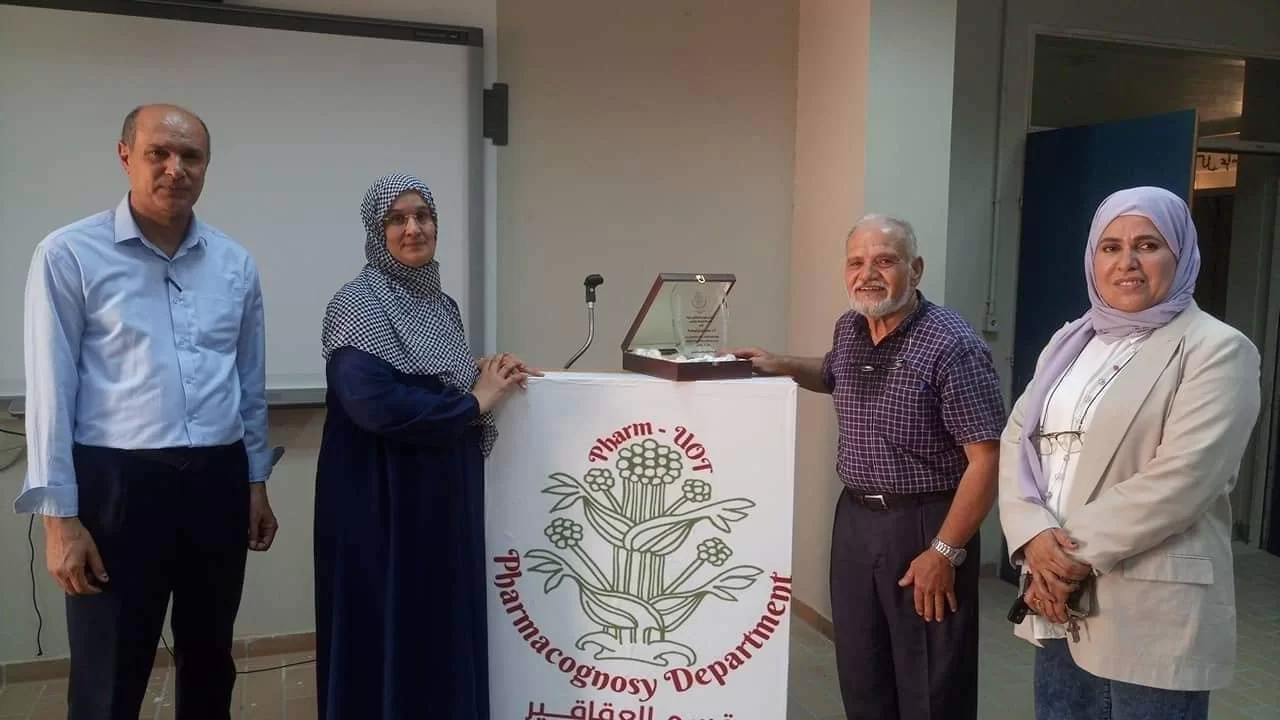
كلية العلوم في صور

الالبومات الخاصة بفعاليات كلية العلوم