Faculty of Science

More ...

About Faculty of Science

Faculty of Science

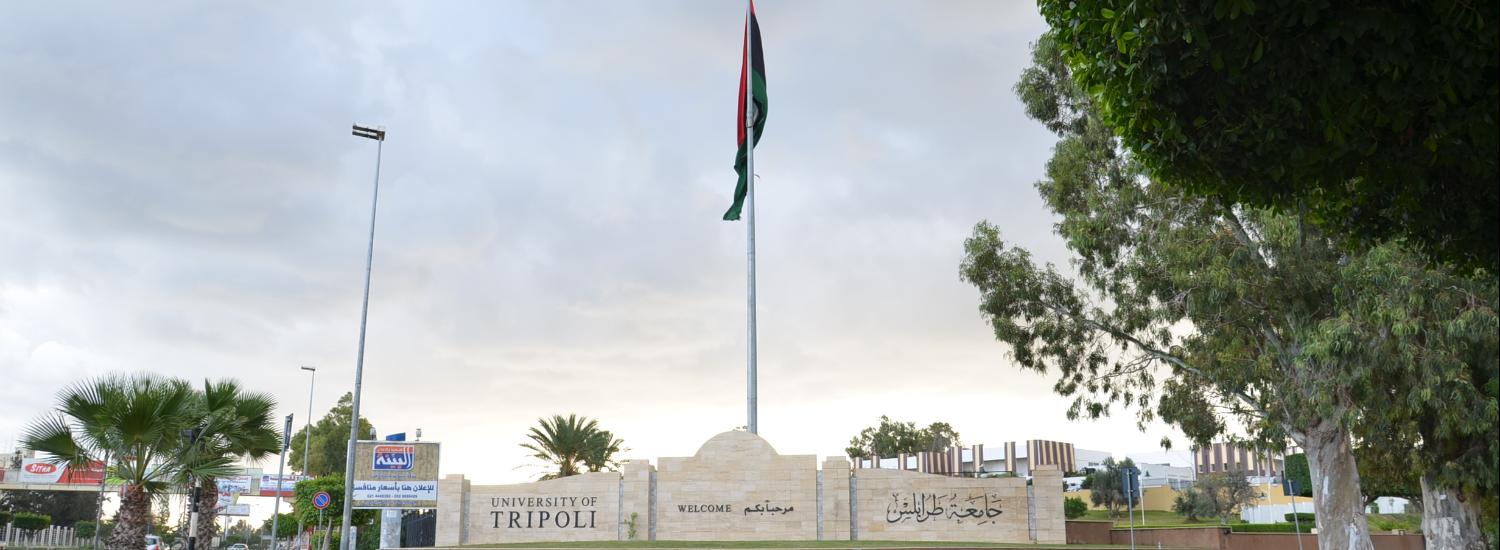
The Faculty of Science is the core at the University of Tripoli, as it was the first that established in this prestigious university. It is also the first faculty of science in Libya. At the present, it includes ten scientific departments: Departments of Zoology, Mathematics, Physics, Chemistry, Botany, Geology, Computer Science and Statistics, Atmospheric science and geophysics. It currently works to create a new department of Archaeology in order to study the scientific and research side of the historical heritage of the Libyan people. Graduates of this college have worked in various governmental sectors, such as oil exploration, extraction and refining, chemical industries complexes in Abu Kamash and Ras Al-Anuf, as well as plastics companies in production and manufacturing, and in factories for soap, cleaning materials and others. They were also recruited by the education sector in different research and pedagogical areas.


The graduates of this faculty have led the scientific process for many years and still represent the first building block in all colleges of science, and some other colleges in all Libyan universities for the past five decades. The scope of work for graduates included Faculties of Medicine (in the field of basic sciences, biochemistry, anatomy, histology and microbiology), many departments in the Faculty of Agriculture, general engineering, chemical and geological engineering; in particular, medical technology and pharmacy, and the Faculty of Economics and Arts. The Faculty of Science provides teaching assistants to other faculties and universities in the Libyan state.


The Faculty of Science is the first to create graduate studies programs in Libya, despite the nature of graduate studies in basic sciences, which need capabilities other than competent professors. Teaching staff in this institution graduated from international universities in the West and the East (USA, UK, Australia, and other European countries). They graduated from universities that are well-known for their high academic standard.


Having obtained their first university degree or higher degrees of specialization from Libya or abroad, graduates of Faculty of Science worked for industrial and nuclear research centers, petroleum sector, marine life, biotechnology, plastics, and other specialized research centers.


The Faculty has also enriched the scientific research movement in the fields of basic sciences in the Libyan state through the issuance of refereed basic science journal.

Facts about Faculty of Science

We are proud of what we offer to the world and the community

170

Publications

267

Academic Staff

1831

Students

686

Graduates

Programs

No Translation Found
Major No Translation Found

No Translation Found...

Details
Major

...

Details
Major

...

Details

Who works at the Faculty of Science

Faculty of Science has more than 267 academic staff members

staff photo

Mr. Hussein R H Gannud

رئيس قسم علوم الحاسب الآلي

Publications

Some of publications in Faculty of Science

دراسة وتقييم طرق التوقيع الرقمي الأكثر أمان للمعلومات

ركزت هذه الدراسة على خوارزميات التوقيع الرقمي ذات المفتاح المتماثل (خوارزميات التوقيع الرقمي ذات المفتاح الخاص والعام). وهذا الموضوع هو واسع الانتشار ولكن لم يتم تغطيت كل المفاهيم المتعلقة به.بدايتا قمنا بعرض مفصل لمفهوم امن المعلومات وكل المصطلحات المتعلقة به في الفصل الاول من الدراسة. ثم وضحنا مفهوم التوقيع الرقمي والطرق المستخدمة في التوقيع الرقمي وكذلك عرضنا خوارزميات التوقيع الرقمي وكان هذا في الفصل الثاني. اما في الفصل الثالث فقد قمنا بتوضح خدمات الامان المتعلقة بخوارزميات التوقيع الرقمي.في الفصل الرابع ناقشنا الطريقة المقترحة لمقارنة ودراسة خوارزميات التوقيع الرقمي محل الدراسة وقمنا ايضا بعرض الدراسات السابقة ، كما قمنا بسرد نتائج الدراسة التي توصلنا اليها من خلال مقارنة نتائج الطريقة المقترحة مع نتائج الدراسات السابقة Abstract This thesis focuses on the topic symmetric key digital signature algorithms (Public–Privet Key digital signature algorithms). This subject is very wide, but still it is tried to cover many of the topics related to it. Firstly, a brief introduction about information security is given and its related terms are discussed. Thereafter showed digital signature algorithms and its methods. After that, comes the security services related to digital signature algorithms and it is discussed in Chapter 3. In last chapter, discussed the proposed method of evaluation with previous studies and write the results.
رمزي حميد القانوني (2014)
Publisher's website

Fault Tolerance Capabilities In C Language A Case Analysis

هذا البحث يقدم نماذج العيب للبرمجة بلغة السي أثناء تنفيد البرامج، نماذج العيب تزود تحليل للعيب/ الفشل موضحاً كيف يمكن للعيب في البرمجة بلغة السي أن يسبب تغيير حالة البيانات في البرنامج لتصبح حاطئة، وكيف أن تلك البيانات الخاطئة يمكن أن تستمر إلى الحالة النهائية للبرنامج، وبذلك يظهر الفشل Failure. نماذج العيب أيضاً تتضمن دليل لأنواع العيوب التي يعتقد أنها تمثل العيوب التي من المحتمل أن تكون مقدمة في البرامج من قبل مبرمجين يكتبون برامج لغة السي. كل نوع من هذه العيوب يكون موصوفاً في شروط حسب العيب الذي يظهر في محتوى برنامج لغة السي الأصلي وكذلك كيف يمكن أن يسبب التأثير في حالة البرنامج. أنواع العيوب تكون محددة من التحليل الدقيق لقواعد اللغة syntaxes ومعانيها semantics للبرامج المكتوبة بلغة السي. نماذج العيب يمكن أن تساعد المختبرين والمبرمجين لتحديد الأماكن في البرنامج التي غالباً ما تظهر فيها العيوب، نماذج العيب يمكن أن تكون أساساً جيداً لتصنيف العيب وإختبار التغيير وتفتيش البرنامج وتقييم إستراتيجيات الإختبار للبرامج المكتوبة بلغة السي. أمثلة معطاة لتبين النماذج الملائمة لهذه الأغراض. Abstract This thesis presents a fault models for C programming (Turbo C, version 3.0) in run-time of programs. The fault models provide a fault/failure analysis of how a fault in C programming can cause a data state change in the program to become corrupted, and how that erroneous data can propagate to the final state of the program, thereby manifesting a failure. The fault models also include a catalog of fault types that are believed to represent faults likely to be introduced in programs by programmers writing C code. Each type of fault is described in terms of how it appears syntactically in source code as well as in how it can cause an infection of program state. The fault types are identified from a careful analysis of the syntaxes and the semantics of C programs. The fault models can help testers and programmers identify places in a program where faults are most likely to appear, and identify what kinds of faults to look out for when using certain feature in C language. The fault models is claimed to be a good foundation for fault seeding, mutation testing, program inspections, and evaluation of testing strategies for C programs. Examples are given that demonstrate the model’s suitability for these purposes.
وفاء حسين محمود المصباحي (2010)
Publisher's website

A Thesis Submitted in Partial Fulfillment of the Requirements for the MasterDegree of Science in Mathematics

أعداد كاتالان هي متتالية من الأعداد الطبيعية سميت نسبة إلي العالم البلجيكي يوجين شارلز كاتالان، وتدخل في حل العديد من مسائل العد مثل عدد تقسيمات مضلع محدب إلى مثلثات، عدد القمم الجبلية التي يمكن تشكيلها باستخدام n زوج من القطع المستقيمة الصاعدة والهابطة بعض المسارات الشبكة من نقطة الاصل إلي النقط ( (n,nبالإضافة إلي بعض التطبيقات في جبر المصفوفات والزمر. تهدف هذه الدراسة إلي تسليط الضوء علي بعض خواص أعداد كاتالان وتطبيقاتها في مسائل رياضية مختلفة، بالاضافة إلي دراسة لأعداد كاتالان المعممة ومثلث كاتالانالتطبيقات في التطبيقات في جبر المصفوفات والزمر Abstract Catalan numbers are a sequence of natural numbers named after the BelgianEugene Charles Catalan mathematician(1814-1894),they enumerate a lot of classes of combinatorial objects, for example the partitionings of a convex polygon, the mountain ranges that can be drawn with n upstrokes and n down strokes, some integral lattice paths and some problems in groups and matrices.The aim o this study is to highlight some properties, some applications of Catalan numbers, the generalized Catalan numbers and Catalan triangle.
اية فريد جرناز (2016)
Publisher's website

Faculty of Science in photos

Faculty of Science Albums