كلية اللغات

المزيد ...

حول كلية اللغات

في العام الدراسي 1987/1986م تأسست كلية اللغات تحت اسم مركز اللغات، في سنة 1988م صدر قرار اللجنة الشعبية العامة (سابقا) رقم 245 لسنة 1988م بتسمية المركز بإسم كلية اللغات، في العام 2002م أدمجت كلية اللغات وكلية العلوم الاجتماعية والتطبيقية وكلية التربية تحت مسمى "كلية الآداب".


في بداية فصل الخريف من العام الجامعي 2009/2008م أعيد نشاط كلية اللغات الأكاديمي في جميع مراحله عملاً بقرار اللجنة الشعبية العامة (سابقاً) رقم 535 لعام 2007م بشأن إعادة تنظيم الجامعات والمعاهد العليا، ومن ثم تم فصل أقسام اللغات جميعها "طلاباً وأساتذة" والتي كانت مندمجة في كلية الآداب.


كلية اللغات في عصرها الثاني تضم ستة أقسام هي:


اللغة العربية.

اللغة الإنجليزية.

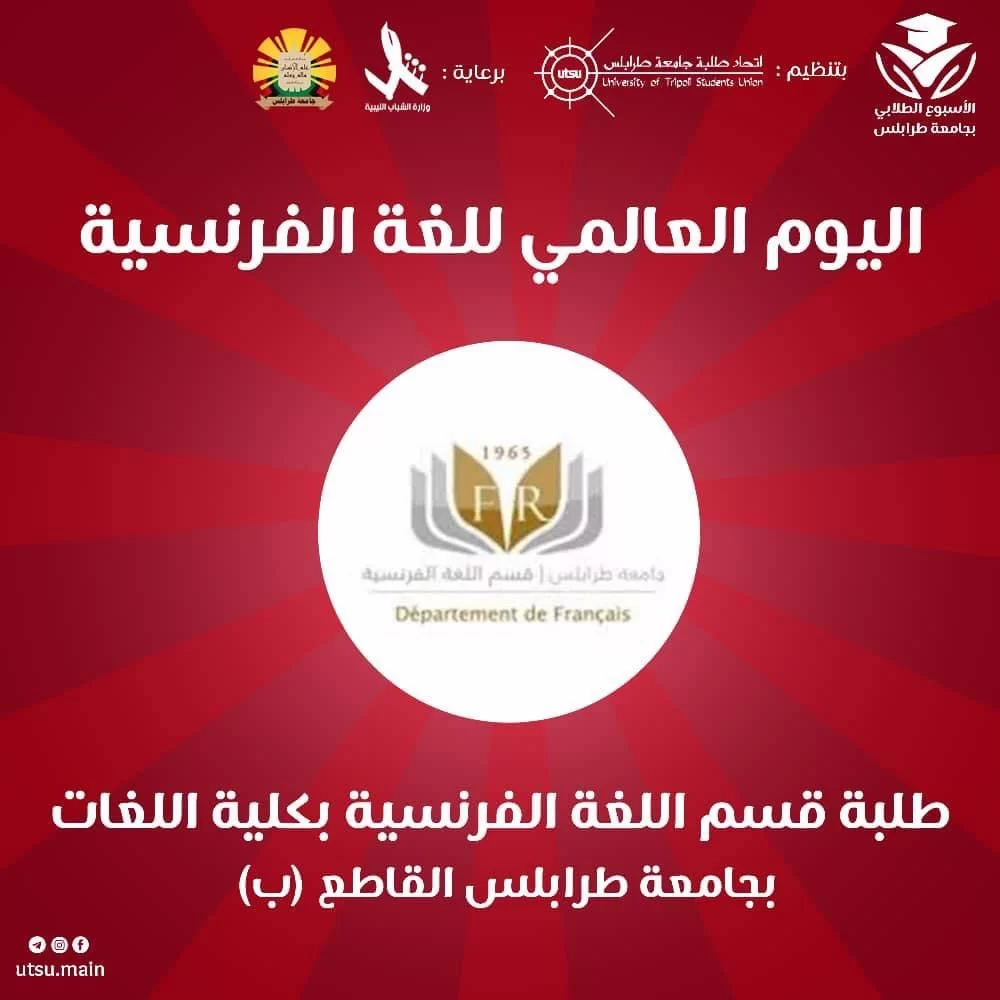
اللغة الفرنسية.

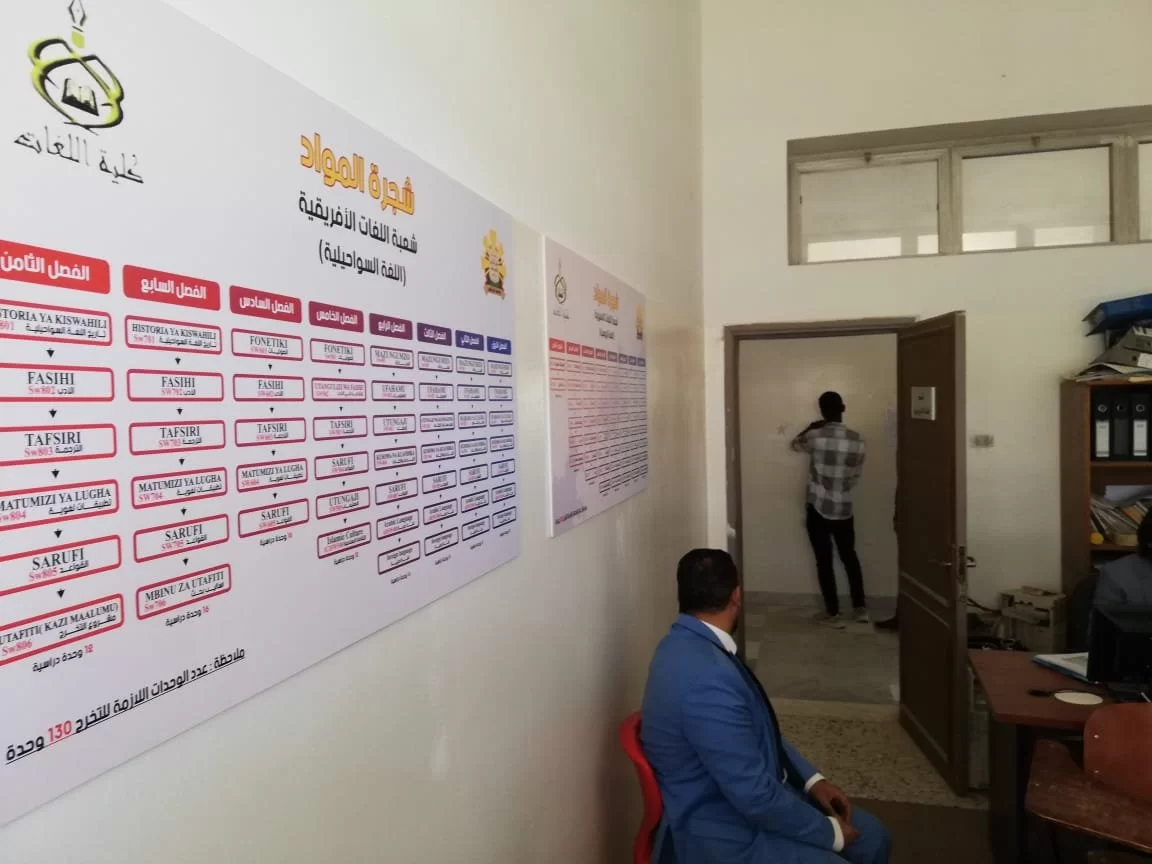
اللغات الأفريقية.

اللغة الإسبانية.

اللغة الايطالية.

قسم الترجمة

حقائق حول كلية اللغات

نفتخر بما نقدمه للمجتمع والعالم

82

المنشورات العلمية

161

هيئة التدريس

5048

الطلبة

48

الخريجون

المزيد من الأخبار

البرامج الدراسية

ليسانس لغة فرنسية
تخصص اللغة الفرنسية

يهدف البرنامج الي تأهيل مختصين في اللغة الفرنسية وذلك عن طريق مسيرة دراسية تمتد علي...

التفاصيل
ماجستير لغة فرنسية
تخصص اللغة الفرنسية

...

التفاصيل
ليسانس لغة سواحيلية
تخصص اللغة السواحيلية

ليسانس لغة سواحيلية...

التفاصيل

من يعمل بـكلية اللغات

يوجد بـكلية اللغات أكثر من 161 عضو هيئة تدريس

staff photo

أ. مصطفي عبدالله عبدلرحمن بشير

محاضر في دراسات الترجمة يعمل بجد وإجتهاد، يركز على خلق بيئة إيجابية يمكن للطلاب التعلم فيها. يركز على دمج المعرفة متعددة التخصصات المدعومة بأمثلة من الحياة الواقعية في الفصل الدراسي لإشراك الطلاب من مختلف توجهات التعلم. مهتم بتطوير مهنة تجمع بين التدريس والبحث ، مع الحفاظ على المشاركة المجتمعية العامة في جوانب مختلفة.

منشورات مختارة

بعض المنشورات التي تم نشرها في كلية اللغات

Thematic Analysis in Translating English and Arabic Scientific Texts

The thematic and information structure of scientific and technical texts are arguably different among languages. This study examines the thematic structure of scientific texts in English and Arabic to see the differences in the hierarchical organization at different thematic levels. It adopts Halliday’s functional model of theme-rheme and applies it to English and Arabic scientific texts. The paper mainly investigates the three levels of theme: textual, interpersonal and experiential with the intention of discussing their translations into Arabic. It uses a corpus data of two scientific texts. The syntactic and textual elements of those texts were compared and contrasted and professional translations were provided to study the Arabic thematic structure. The data provides English and Arabic versions which allow for a comparable analysis of structure, convention and style. The study reveals that the most frequent type of themes and thematic progression is the experiential theme. It shows that those experiential themes are almost always occupying initial positions. The structure of themes has the tendency to be reproduced in the translation. However, the findings of this investigation indicate that position of themes may change as a result of translation, or changed from experiential into textual.
Hamza Ethelb(8-2019)
Publisher's website

المفارقة في ثلاثية علي الهوني (لافية، وتغريبة أولاد الحارة، وظلُّ الشيطان) دراسة تحليلية

استحوذت المفارقة على اهتمام الدارسين الغربيين ولم يلتفت إليها النقاد العرب إلاَّ في ثمانينات القرن العشرين، وقد ظهرت عند الغرب سنة (1502) ودخلت الأدب في بداية القرن الثامن عشر. إن مصطلح (المفارقة ELRONEIA) مصطلح أسلوبي، وقد يصبح رؤية أو ظاهرة إبداعية عند بعض الأدباء والكُتّاب، وأن الأدب جميعه يتصف بالمفارقة، إن كانت بقصد أو بدون قصد. ومن المفارقات الجنينية في اللغة الإنجليزية "FLEER يسخر"، و"FLOUT يهزأ"، و "GIBE يُعيّر"، و"JEER يغمر" و"MOCK يتهكم"، و"SCOFF يزدري"، و"SCORN يحتقر"...أما في اللغة العربية فقد وردت (للمفارقة) استعمالات عدة أدبية وبلاغية مثل "التعريض"، و"التشكك"، و"المتشابهات"، و"تجاهل العارف"، و"تأكيد المدح بما يشبه الذم"، و"تأكيد الذم بما يشبه المدح"، و "هزل يراد به الجَدُّ"...وبعد هذه المسميات ظهرت المصطلحات التالية: 1- مفارقة اللغة: وهي طريقة غير مباشرة للتعبير عن المعنى المقصود والذي يخالف الظاهر. 2 - المفارقة اللفظية (Verbal Irony) وهي نمط كلامي يكون المعنى المقصود فيها مناقضاً أومخالفاً للمعنى الظاهر. 3 - مفارقة تضاد بين ثنائيات لفظية: وفيها تتجمع ألفاظ ثنائية على أساس التضاد لتوليد المفارقة. 4 - المفارقة القرآنية: وهي اللفظ الذي يؤدي معنى التضاد أو الاختلاف مع السياق. 5 - مفارقة المثل الشعبي: هي أن يضرب الكاتب "مثلاً قديماً" قاصداً منه إيماءة لشيء ما". 6 - مفارقة المستوى الصوتي: يمكن تمييز المفارقة الصوتية من نبر الصوت، ومن درجة قوته أو ضعفه إن كان جهورياً أو مهموساً ... يريد به الكاتب كشف شيء ما. 7 - مفارقة المستوى الدلالي: هي انتقال اللفظ من حقله الدلالي المعروف في أصل الاستخدام إلى حقل دلالي آخر بحيث يقيم مع لفظ آخر علاقة دلالية جديدة من نوع التضاد أو التحالف لغاية انتقادية. 8 - مفارقة المستوى التركيبي: هي المفارقات القائمة على التنافر مع تراكيب أخرى أو مع نفسها. 9 - مفارقة الموقف: هي أن نتوقع حدوث أمر فيحدث نقيضه... 10- المفارقة الرومانسية: هي وسيلة تكشف ما في الحقيقة الواحدة من تناقض... 11 -المفارقة الدرامية: هي تحول يحدث مع مرور الزمن، وأنها تفيد انقلاباً مفاجئاً في الظروف... إذن المفارقة لم تكن شيئاً طارئاً استخدمه الكاتب بجل أنواعه، وإنِّما كان تعبيراً منه على أحداث عاصرها لم يستطع التعبير عنها إلاَّ من خلال هذا الأسلوب –المفارقة، للتملص والهروب من يد الرقابة والمسؤولين.
سميرة عمار إبراهيم الرباعي (2013)
Publisher's website

Portrayals of the Orphan and Child Labour in Charles Dickens' Novels

The aim of this thesis was to examine the harsh childhood intwonovels of Charles Dickens.In the previous chapters the researcher provided an analytical description of the conditions of orphan and child labour as described in Dickens' Oliver Twist and Great Expectations. Trying to highlight the problem that occurred because of losing parents or poverty in that era through Dickens' novels, in addition to, explaining the family background effects on adults' treatment of children.Searching for the factors beyond this common theme in the Victorian age, the researcher found out that the bad treatment of orphan and child labourwas due to some factors which affected children's life. Such factors include: - The social and economic conditions of the Victorian agesuch as, the poverty, the industrial revolution and the over-population. - Unjust environment represented by cruel laws of the poor and social classes in that era. It has been concluded that the main factors that helped to create the child labour phenomenon in the Victorian age was the industrial revolution which created a great need for cheap work force to support the capitalist employers. In addition, a great many people suffered fromvery low standard of living in the Victorian society especially the people who emigrated from the rural areas to the urbanized cities such as London. Moreover, there was tremendous increase of population which made the poor families force their children to work in factories and mills to earn their living. Dickens as the greatest English novelist in the Victorian era came to the very suitable moment to depict the very sever living conditions of the poor class in London and to fight the unjust treatment of the employers and the unjust laws of the poor. Dickens himself suffered a hard experience in his childhood when his father was imprisoned and Dickens himself was separated from his family and forced to work in a blacking warehouse. This in addition to his deep feelings of the poor's sufferings together with his true faith injustice for all human beings especially the poor, made him this great author of such masterpieces like Oliver Twist and Great Expectations. After analyzing the two novels of Dickens, it can be said that Dickens was a realistic author in his novels where he depicted his characters depending on reality of the English society of his time. Another aim was to shed light on the problems that occurred in that era because of losing parents or sever poverty especially child labour. The English society in the Victorian age had double standard view on the children. High classes children were considered to be beautiful innocent creatures who should be highly looked after whereas in law classes children were abused and treated harshly as bad creatures produced by lazy people who deserved to be punished not helped. Accordingly, the situation for poor and orphaned children was inhuman. According to the previous analysis, the researcher found out some similarities and some differences between the two protagonists. Both of main characters are orphans from the beginning of the novel where Oliver's mother dies directly after he is born and Pip is seen in his family's grave. So the reader doesn't have a clear picture about their mothers and fathers. We can find another similarity between Oliver and Pip in that they are both from the poor low class. Oliver and Pip are similar in working at an early age as child labour. The two protagonists lived a harsh life because of cruel treatments of the adults who usually look down at children as being inferior creatures. Oliver is badly treated in the workhouse, with the undertaker and by Fagin (the head of the gang) whereas Pip also is abused by his heartless sister Mrs. Joe, Miss Havisham and Estella.In fact, not all adults usually abuse the protagonists where some of them such as Joe and Magwich who give hand to Pip, and Mr. Brownlow who adopts Oliver. These adults represent the examples of orphan domestic stability were the real families are replaced by substitutes because they are broken. Both Pip and Oliver's reaction to the abuse and oppression of the society is to separate themselves from the natural stream of their society so they both lead up normal social life and they are marginalized and feel isolated from other people. Accordingly, Oliver escapes to London out of starvation and loneliness as well as undertaker wife's mistreatment together with other labourerswhereas Pip leaves his sister and her husband's house to London in order to get rid of his unexpected social status and his poverty. Pip and Oliver get into special relationships with convicts and receive some kind of care from these criminals where Magwich becomes Pip's benefactor and Fagin protects Oliver from misery and starvation providing him with a place to live in. On the other hand, there are some differences between the two protagonists. One of these differences is that Pip has got a blood tie represented by his sister, but Oliver from the first moment lives among other orphans in the workhouse. The environment in which Pip is raised is home like where he receives some kind treatment from Mr. Joe - his brother in law. Oliver is raised "from the first moment", in an orphanage and then in a workhouse. There is another difference between Oliver and Pip regarding to leaving their original place in that Oliver searches for safety while Pip searches for a higher social status. The two novels are narrated differently. On the one hand Oliver Twist is narrated by the omniscient narrator on the other hand Great Expectations is narrated by the first person through Pip's point of view. It can be said that Pip's narration gives the reader actions development through Pip's point of view and his own feelings. Whereas concerning Oliver we find that the writer tries to criticize the society through third person narration. Through reading the two novels of Charles Dickens, we can extract some important lessons. However, Dickens left valuable literature full of moral lessons concerning human life. He treated very essential issueswhich are heart touching, trying through his works to reform his society. Accordingly, his readers can easily extract useful lessons from his gorgeous novels. In this thesis, the researcher introduces some of them through the two novels. In Oliver Twist, we find that Oliver struggles to keep his goodness in spite of the opposing circumstances where he has lived among evil characters. So we know that a human being should face his difficulties and do not let himself bend before them. We learn from Oliver behavior that it is necessary to be hopeful and do not let despair beat us. So we should not blame others for our misfortune rather we should think positively and try to be optimistic.It is logical not to let our past mistakes to be a heavy burden that prevents us from looking for a better and cleaner life and accordingly we should not judge others by their past. Dickens tried through Oliver Twist to convey the idea that evil is not necessarily inherited by poor generations because of poverty. The significant moral of Great Expectationsis that affection, loyalty and conscience are more important than social status and wealth. Pip himself realizes this lesson through trying his ideas of ambition and self-improvement. His trials to improve himself give him the hope to achieve his great Expectations. So, the reader learn that wealth does not usually make people happier as well as the outer appearance may give false ideas about the true conditions. For example, is "Satis House", Pip is shocked by the miserable people inside this big house. Those rich people live unhappy life and cannot love others whereas the convict Magwich becomes a compassionate man who supports Pip. Of course wealth can change people, but in most cases, to the worse. We should preserve our moral values when we get rich and also we should treat others according to high moral standards even though we turn to have a higher status. Pip in some situation is affected by the self-improvement and starts to feel ashamed of his friends, which is a good lesson for the reader to be aware of his character transformation. It is not necessary for high class people to be more intelligent and generous. Such morals can be found in all classes. On the contrary, wealthy people tend to exploit other and be ungrateful to them.This fact is shown by the conduct of Miss Havisham, Estella and even Pip for sometime. To sum up, we can say that the figure of the orphan and child labour is dispersed throughout the pages of Dickens' novels. His orphan characters were similarly remembered as Charles Dickens. It can be said that Dickens is author of his time where he gives a clear picture about the harsh conditions of the 19th century England. Dickens portraits lonely orphans and abused children in which the orphan is the main character who is innocent, helpless and often adopted by a wealthy benefactor. Dickens as a critic. Social novelist tries through his novels to criticize and reform the English society. He tries to shed light on the exploited children in the Victorian era. Children work different kinds of jobsin many places which used them as a child labour in factories, coal mines, cotton spinning machine, textile mills, forges… etc. The others are chimney sweeper, boot blacking, shoe makers, newspaper seller, street cleaner and even criminals. Dickens touchingly expresses suffering of poor children focusing on the poverty-stricken parts of London. He depicts sad faces of children and how they are neglected and badly treated by cold and hard hearted abuse.
إيمان جمعة عويص (2016)
Publisher's website

المجلات العلمية

بعض المجلات العلمية التي تصدر عن كلية اللغات

وثائق تهمك