
قسم الاحياء الدقيقة والمناعة

المزيد ...

حول قسم الاحياء الدقيقة والمناعة

يعتبر قسم الأحياء الدقيقة والمناعة بكلية الصيدلة من الأقسام الرئسية التي تدرس علم الأحياء الدقيقة الصيدلانية والمناعة، في بداية أنشئ كلية الصيدلة كانت مقرارت القسم تدرس تحت إشراف قسم الصيدلة الصناعية إلى أن تم انشاء قسم الأحياء الدقيقة والمناعة في بداية التسعينات. يقوم قسم الأحياء الدقيقة والمناعة بتدريس مقررات الأحياء الدقيقة العامة والأحياء الدقيقة الصيدلانية وعلم المناعة الصيدلانية وكذلك مراقبة الجودة الميكروبيولوجية، كما يقوم القسم أيضا بالإشراف على تدريس مقررات الإحصاء واللغة العربية لطلاب الفصل (التمهيدي) الأول بكلية الصيدلة، هذا بالإضافة إلى تعاون القسم في المجال البحثي والتدريس الجامعي مع بعض الكليات المناظرة في الجامعات الليبية سواءً كان في مرحلة البكالوريوس أو مرحلة الدراسات العليا، وكذلك مع مركز مكافة الأمراض ومركز الرقابة على الأدوية والأغذية. كمـا يقوم القسم بتقديم الاستشارات والخبرات في مجالات الأحياء الدقيقة العامة والصيدلية والطبية والصناعية، كذلك يقدم القسم الخبرة الفنية وإجراء التحاليل اللازمة على مختلف العينات التي ترد إلى القسم في مجال الرقابة الجرثومية وتأكيد جودة التصنيع في كل ما يتعلق بالمستحضرات الصيدلانية وتقييم فاعلية التضاد الميكروبي للمضادات الحيوية وغير الحيوية، كما يحرص القسم على التعاون مع المراكز الصحية والمستشفيات العامة في مجال الأبحاث والاستشارات المتعلقة بعلم الأحياء الدقيقة الصيدلانية.

حقائق حول قسم الاحياء الدقيقة والمناعة

نفتخر بما نقدمه للمجتمع والعالم

12

المنشورات العلمية

5

هيئة التدريس

من يعمل بـقسم الاحياء الدقيقة والمناعة

يوجد بـقسم الاحياء الدقيقة والمناعة أكثر من 5 عضو هيئة تدريس
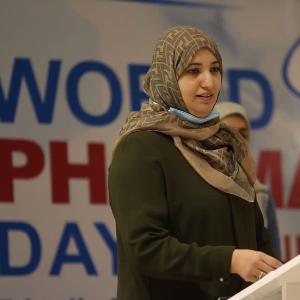
staff photo

د. بسمة محمد خليفة دورو

بسمة دورو هي احد اعضاء هيئة التدريس بقسم الاحياء الدقيقة والمناعة بكلية الصيدلة. تعمل السيدة بسمة دورو بجامعة طرابلس كـاستاذ مساعد منذ 2017-04-15 ولها العديد من المنشورات العلمية في مجال تخصصها

منشورات مختارة

بعض المنشورات التي تم نشرها في قسم الاحياء الدقيقة والمناعة

 Effect of Ciprofloxacin on S. aureus and E. coli Growth in Presence of Vitamin C Using Cup Cut Diffusion Method

Abstract: Ciprofloxacin is a second-generation of fluoroquinolone, broad-spectrum antibiotic with bactericidal activity against Gram-positive and Gram-negative organisms. It is one of the most widely used antibiotics, because of its efficacy, safety, and relatively low cost. Ascorbic acid (vitamin C) is water-soluble monosaccharide antioxidant; it is essentially required by the body for its various biochemical and physiological processes. S. aureus is Gram-positive cocci; widely distributed in the environment, it is a member of the normal flora of the body. S. aureus is not always pathogenic; it is a common cause of skin infections including abscesses, respiratory infections such as sinusitis, and food poisoning. E. coli is Gram-negative bacteria, found in the environment, foods, and intestines. Most E. coli strains are harmless; it is part of the normal microbiota of the gut. However, some serotypes of E. coli cause serious food poisoning in their hosts; it can cause diarrhea, while others cause urinary tract infections, respiratory illness and pneumonia, and other illnesses. Method: Cup cut diffusion method was applied. Experiment I: is carried out to choose the concentration of vitamin C to be used in experiment II. The negative control is normal saline, added in cup in each plate, vitamin C (100 mg/mL, 200 mg/mL, 400 mg/mL) was added, the volume in each cup was 100 μL. Experiment II: Eight groups of treatments were applied. The first is the negative control (1% normal saline), the second group is the positive control of vitamin C (200 mg/mL). The third, fourth and fifth groups are ciprofloxacin with different concentrations (10 mg/mL, 20 mg/mL, 40 mg/mL); the sixth, seventh and eighth are the combination of vitamin C with each concentration of ciprofloxacin (10 mg/mL, 20 mg/mL, 40 mg/mL). Each group includes six petri dishes. Bacterial plates were incubated at 37 o C for 24 h and 48 h. Zone of inhibition is measured in mm. Results and conclusion: Ciprofloxacin produces dose dependent increase in zone of inhibition of S. aureus and E. coli growth, after 24 and 48 hours incubation. While vitamin C in the concentration used produced inhibitory effect on the growth of S. aureus and E. coli, after 24 hours incubation, vitamin C effect was not changed after 48 hours incubation. After 24 hours incubation, vitamin C potentiated the effect of ciprofloxacin at low concentration (10 mg/mL); while vitamin C antagonized the effect of ciprofloxacin at higher concentrations (20 and 40 mg/mL) on S. aureus growth. In the same time, ciprofloxacin antagonized the inhibitory effect of vitamin C on S. aureus growth. After 48 hours incubation, S. aureus produced resistance against ciprofloxacin alone, and that combined with vitamin C compared to zone of inhibition after 24 hours. Ciprofloxacin produced dose dependent inhibition of E. coli growth after incubation for 24 and 48 hours. Vitamin C potentiated the inhibitory effect induced by ciprofloxacin (additive effect). The inhibitory effect of ciprofloxacin, vitamin C and the combination was not changed after 48 hours compared to 24 hours.
Bassma M. Doro, Suhera M. Aburawi(7-2019)
Publisher's website

Comparative assessment of a DNA and protein Leishmania donovani gamma glutamyl cysteine synthetase vaccine to cross-protect against murine cutaneous leishmaniasis caused by L. major or L. mexicana infection

Leishmaniasis is a major health problem and itis estimated that 12 million people are currently infected.A vaccine which could cross-protect people against different Leishmania spp. would facilitate control ofthis disease as more than one species of Leishmania may be present. In this study the ability of a DNA vaccine, using the full gene sequence for L. donovani gamma glutamyl cysteine synthetase (GCS) incorporated in the pVAX vector (pVAXGCS), and a protein vaccine, using the corresponding recombinant L. donovani GCS protein (LdGCS),to protect against L. major or L. mexicana infection was evaluated. DNAvaccination gave transient protection against L. major and no protection against L. mexicana despite significantly enhancing specific antibody titres in vaccinated infected mice compared to infected controls. Vaccination with the LdGCS protected against both species but only if the protein was incorporated into non-ionic surfactant vesicles for L. mexicana. The results of this study indicate that a L. donovani GCS vaccine could be used to vaccinate against more than one Leishmania species but only if the recombinant protein is used. arabic 30 English 176
Basma Doro, (12-2012)
Publisher's website

Blood donors status of HIV, HBV and HCV in Central Blood Bank in Tripoli, Libya

virus infection continues to be an important public health concern with regard to blood transfusion in Libya and in Africa. This concern is related to the screening test. Objectives: The main aim of this study to investigate the blood donors samples for HIV, HBV and HCV infections in Tripoli-Libya, North Africa during the first five months of 2015. Methods: The total of 686 blood samples obtained from healthy blood donors who attended Tripoli’s central blood bank, were tested for HBsAg, HCV and HIV using the VITROS® 3600 Immunodiagnostic System. Results: From the 686 samples examined, the frequency of HBsAg positive cases was 0.8%, the number of anti-HBc positive samples was found to be particularly high in the age group 29 and 36 years (p= 0.0001). The number of anti-HBc positive samples was found to be particularly high in the age group 30-39 years (p= 0.01). Most occupation that had positivity with anti-HBc and HBV-DNA were free workers and was less in students. Most positive cases were from east of Tripoli the capital (Tagora, Soq-Aljomaha). Conclusion: The frequency of HBsAg positive blood donors and anti-HBc among this sample was 0.8% and 0.7% respectively, which is low compared with the international findings. The current study estimated the expected exclusion rate of anti-HBc and HBsAg positive donated blood, as this would be an important factor to consider before donation. arabic 16 English 63
Basma Mohamed K Doro(9-2015)
Publisher's website