كلية التقنية الطبية

المزيد ...

حول كلية التقنية الطبية

حقائق حول كلية التقنية الطبية

نفتخر بما نقدمه للمجتمع والعالم

13

المنشورات العلمية

93

هيئة التدريس

38

الطلبة

37

الخريجون

البرامج الدراسية

تخصص

...

التفاصيل
تخصص علوم المختبرات الطبية

...

التفاصيل

من يعمل بـكلية التقنية الطبية

يوجد بـكلية التقنية الطبية أكثر من 93 عضو هيئة تدريس
staff photo

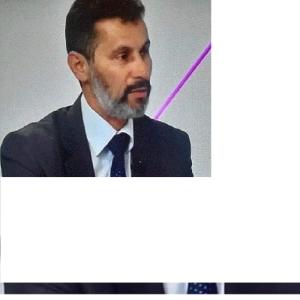
د. صلاح الدين عمرو خميس الباروني

صلاح الدين الباروني هو احد اعضاء هيئة التدريس بقسم علوم المختبرات بكلية التقنية الطبية. يعمل السيد صلاح الدين الباروني بجامعة طرابلس كـاستاذ مشارك منذ 2019/6/10م وله العديد من المنشورات العلمية في مجال تخصصه

منشورات مختارة

بعض المنشورات التي تم نشرها في كلية التقنية الطبية

Serological study on the prevalence of malaria in samples from foreign workers in Tripoli, Libya

This study was primarily conducted to investigate the prevalence of imported malaria in a sample of foreign workers (n-1038) in Tripoli during the period from May 2006 to June 2007. A comprehensive review of malaria epidemiology in Libya in the last two decades was also given. All samples were tested serologically using Malaria Rapid Diagnostic test and then examined using blood film technique. Results showed that only 10 samples (1%) were tested positive for both malaria rapid diagnostic test and blood film. Nine of those infected were identified as Plasmodium falciparum and one as Plasmodium vivax. This study confirms that the prevalence of malaria in legal foreign workers is low and the risk of re-introducing or transmitting malaria in the northern areas of the country is remote. It also gives no good reason for including malaria test among those requested for issuing health certificates to foreign workers. The use of malaria Rapid Diagnostic test for malaria detection in this study was proved to be practical and reliable. Although, the situation of imported malaria in Libya imposes no immediate threat to re-emerging of malaria in the country however, continuous surveillance and monitoring particularly to the southern regions and populations have to be taken in a great consideration. An updated new map of malaria vectors distribution in Libya is urgently needed to be able to outline areas of high risk of malaria transmission.
Fadwa Jamaledden Mustafa Kamel Mahanay, Badereddin Bashir K. Annajar(5-2009)
Publisher's website

Direct and indirect Techniques for provisional Restorations Fabrication for (Implant and non-implant Supported) Fixed Prosthodontics

Abstract Introduction: Provisional restoration is an important part of fixed prosthodontics. It must provide pulp protection, positional stability, occlusion maintenance , and space preservation. There are two methods for provisional restoration fabrication; direct and indirect techniques. Aim: the study aims to identify the most preferred technique of fabricating provisional fixed restorations according to different parameters and situations and to highlight the advantages and disadvantages of each technique, by specialist dentists practicing in different dental clinics in Tripoli. Methodology: In this study, 120 closed ended questionnaires were distributed to specialist dentists in dental fixed restoration among different private dental clinics in Tripoli/Libya to find out which technique they prefer to apply in their clinics. Results: This study has revealed that dentists prefer the direct technique for the anterior area and single unit and up to 3-4 units fixed partial denture. While indirect technique was more commonly used by dentists in cases of multi-units and posterior teeth. In addition, it has a higher success rate and does not cause pulpal and gingival irritation.
NARJES ELGHEZAWI HANAN IRHOMA , ABDUSSALAM ELJABALI (7-2021)
Publisher's website

Knowledge, attitudes and practices of pharmacists about pharmacovigilance, Libya

Background: The concept of pharmacovigilance is not well known in Libya and its practice is still in the early stages. Aims: This study aimed to determine the knowledge, attitudes and practices of pharmacists in Tripoli, Libya about pharmacovigilance and the reporting of adverse drug reactions. Methods: A cross-sectional study was conducted from October 2019 to February 2020 of working pharmacists randomly selected from pharmacies in Tripoli. Participants were eligible for inclusion if they had a degree or diploma in pharmacy from a recognized university or institute. Data were collected using a validated self-administered questionnaire. Results: Of 500 pharmacists selected, 408 completed the questionnaire. The pharmacists' knowledge of pharmacovigilance and reporting of adverse drug reactions was poor overall: only 28.9% correctly defined pharmacovigilance and 14.7% knew about the existence of a centre for pharmacovigilance in Libya. The attitudes of the pharmacists to pharmacovigilance was positive: 77.2% believed that pharmacovigilance needed to be included in the pharmacy curriculum and 73.0% said that they would practice pharmacovigilance if trained. Pharmacists depended mostly on drug information leaflets to update their knowledge on adverse drug reactions. Conclusion: Given the pharmacists' low level of knowledge about pharmacovigilance but their readiness to become involved if trained, training programmes should be introduced for practising pharmacists to improve their knowledge and encourage their active participation in pharmacovigilance. Regulators need to reinforce the importance of reporting adverse drug reactions and implement pharmacovigilance policies in the Libyan health care system.
Ahmed Elbadri M Atia(7-2021)
Publisher's website