كلية الطب البشري

المزيد ...

حول كلية الطب البشري

لقد تم تأسيس كلية الطب البشري في سنة 1973م، بمدينة طرابلس لتقوم بدورها المنوط بها والمتمثل في تخريج الكوادر الطبية المؤهلة، وفي سنة 1980م تم تخريج أول دفعة منها.

تعد كلية الطب البشري من أكبر كليات الجامعة وصرحاً من صروح المعرفة، بحيث أسهمت هذه الكلية خلال العقود الأربعة الماضية في إعداد وتخريج أطباء مؤهلين كان لهم الفضل بعد الله تعالى في إنجاح العمل الطبي من خلال المستشفيات المنتشرة في ربوع الوطن الحبيب لتقديم أفضل الخدمات الصحية، تضم كلية الطب البشري حالياً أكثر من 493 عضو هيئة تدريس جُلهم من العناصر الوطنية الذين كانوا من أوائل الدفعات في هذه الكلية والذين ساهموا في تقديم الخدمات الصحية اللازمة في المستشفيات والعيادات والمستوصفات.

قد تم إيفاد العديد من خريجي هذه الكلية لاستكمال دراستهم في الخارج والذين أثبتوا جدارتهم في التحصيل العلمي والسريري بشهادة العديد من الجامعات العالمية، هذا وفي الوقت الذي تسعي فيه الكلية لتفعيل برنامج الدراسات العليا في مختلف التخصصات فإنها تعمل علي تطوير مفردات مناهجها وطرق التدريس المواكبة لمتطلبات الجودة العالمية.

حقائق حول كلية الطب البشري

نفتخر بما نقدمه للمجتمع والعالم

80

المنشورات العلمية

238

هيئة التدريس

7385

الطلبة

0

الخريجون

البرامج الدراسية

درجة ماجستير
تخصص طب الأسرة والمجتمع

قريباً...

التفاصيل
المقرر الدراسي
تخصص طب الأطفالPD480

A twelve week rotation. Five weeks at Tripoli children hospital, rotating in the inpatient and outpatient departments.One week at the pediatric department –Tajoura hospital. Five weeks at Tripoli medical center, one week at university.Emphasis is on acquiring skills, and medical knowledge to be able...

التفاصيل

من يعمل بـكلية الطب البشري

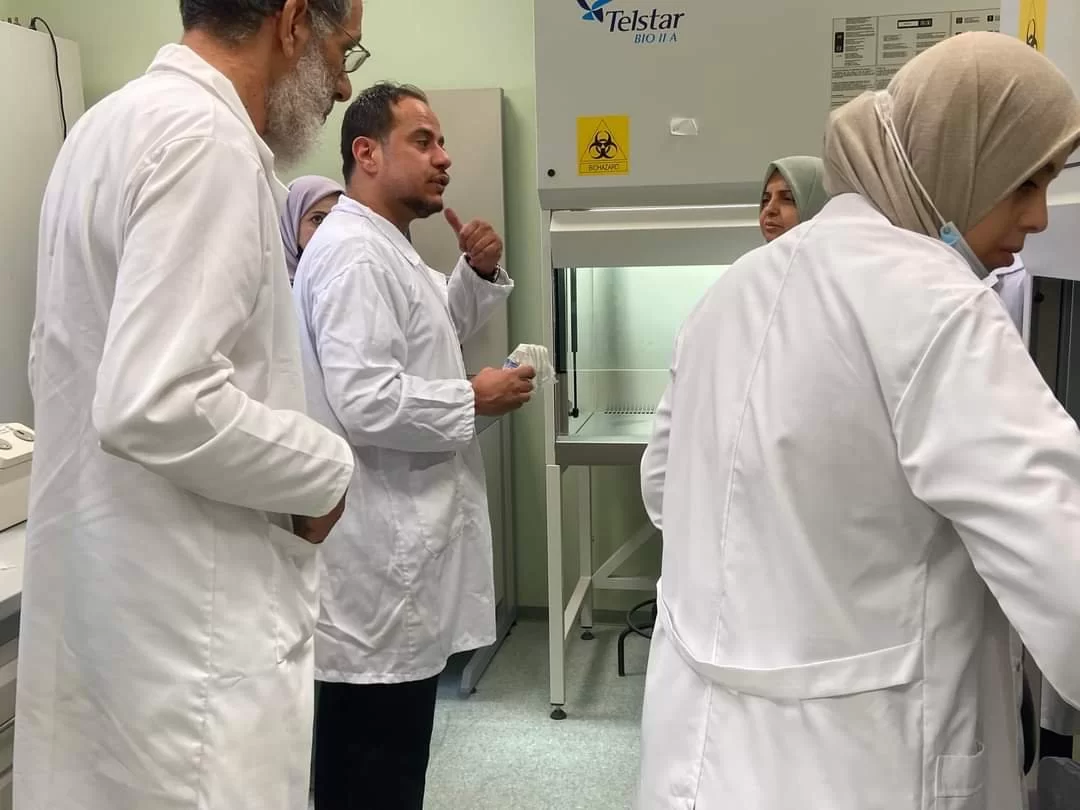
يوجد بـكلية الطب البشري أكثر من 238 عضو هيئة تدريس

staff photo

أ. علي مسعود خليفة المقدمي

منشورات مختارة

بعض المنشورات التي تم نشرها في كلية الطب البشري

Prevalence of atopic dermatitis among Libyan asthmatic children

Background: Atopic dermatitis (AD) is a common, chronic, relapsing, itchy, skin condition occurring in patients with a personal or family history of atopy, and there is clinical association among different allergic disease in a way that treating one of them will improve the other. Many studies worldwide showed presence of AD in asthmatic children with different prevalence among countries and showed clinical improvement in asthma control on treatment of atopic dermatitis. Therefore, this study was conducted to assess the prevalence of atopic dermatitis among Libyan asthmatic children. Methods: This is an observational cohort study on asthmatic Libyan children who were treated and followed up at Tripoli children hospital in Tripoli, Libya. It carried out on 300 children suffering from asthma admitted from pediatric outpatient department as well as from emergency department and asthma clinic over a period of 24 months; from December 2017 to December 2019. The parents were asked to complete a questionnaire to collect the needed information after their consent being taken. To assure the accuracy and consistency of the methodology (sampling procedure, measurements, and a collection of the data), a standardized protocol was prepared. Data were entered in SPSS statistical package and consequently were analyzed and presented as descriptive statistics. Results: The prevalence of atopic dermatitis among asthmatic Libyan children was 16.7% in our study. The results showed significant relationship between address and prevalence of atopic dermatitis. Conclusion. Further studies are required to address the ethnicity, environmental factors, skin type and others attributed to this problem and we recommend all pediatricians to look for AD in asthmatic children and treat it accordingly arabic 7 English 56
Hisham Alrabty, Munera Addala(5-2020)
Publisher's website

Paternal bisphenol A exposure induces testis and sperm pathologies in mice offspring: Possibly due to oxidative stress?

Bisphenol A (BPA), an endocrine and metabolic disruptor, is widely used to manufacture polycarbonate plastics and epoxy resins. Accumulating evidence suggests that paternal BPA exposure adversely affects male germlines and results in atypical reproductive phenotypes that might persist for generations to come. Our study investigated this exposure on testicular architecture and sperm quality in mouse offspring, and characterised underlying molecular mechanism(s). A total of 18 immature male Swiss albino mice (3.5 weeks old) were randomly divided into three groups and treated as follows: Group I, no treatment (sham control); Group II, sterile corn oil only (vehicle control); Group III, BPA (400 μg/kg) in sterile corn oil. At 9.5 weeks old, F0 males were mated with unexposed females. F0 offspring (F1 generation) were monitored for postnatal development for 10 weeks. At 11.5 weeks old, the animals were sacrificed to examine testicular architecture, sperm parameters, including DNA integrity, and oxidative stress biomarkers (malondialdehyde (MDA), protein carbonylation (PC), and nitric oxide (NO)). Results showed that BPA significantly induced changes in the body and testis weights of the F0 and F1 generation BPA lineages compared to F0 and F1 generation control lineages. A decrease in sperm count and motility with further, increased sperm abnormalities, no or few sperm DNA alterations and elevated levels of MDA, PC, and NO were recorded. Similar effects were found in BPA exposed F0 males, but were more pronounced in the F0 offspring. In addition, BPA caused alterations in the testicular architecture. These pathological changes extended transgenerationally to F1 generation males’ mice, but the pathological changes were more pronounced in the F1 generation. Our findings demonstrate that the biological and health BPA impacts do not end in paternal adults, but are passed on to offspring generations. Hence, the linkage of seen testis and sperm pathologies in the F1 generation to BPA exposure of their parental line was evident in this work. The findings also illustrate that oxidative stress appears to be a molecular component of the testis and sperm pathologies. arabic 18 English 101
Mohamed A. Al-Griw(11-2020)
Publisher's website

Impact of Maternal Diabetes Mellitus on Early Morbidity and Mortality of Preterm Babies at Al Jala Maternity and Gynecology Hospital, Neonatal Intensive Care Unit (Tripoli, Libya)

ABSTRACT Studying burden of maternal diabetes mellitus on preterm babies is an important step to improve outcomes of these babies. The study was designed to compare morbidity and mortality in preterm babies (28-36 wks) born to `mothers with and without diabetes mellitus (DM). An analytical cross-sectional study was conducted at Al Jala Maternity Hospital, Neonatal Intensive Care Unit (NICU) department; all preterm babies with gestational age (GA) (28-36 wks) were enrolled in the study, from January 1st 2016 to December 31st 2016. The study sample was divided to two groups according to maternal health; preterm infant of diabetic mother (IDM) and preterm non-IDM. The information retrieved and analyzed were; sex, gestational age, birth weight, mode of delivery (MOD), Apgar score at 1st and 5th minute, hypoglycemia, respiratory illness, hyperbilirubinemia, sepsis, major congenital anomalies , length of stay (LOS), and neonatal death. Collected data coded and SPSS software was used for analysis. A total of 378 preterm babies were enrolled in the study period divided into: preterm IDM group 79(20.9%) babies and preterm non-IDM group 299(79.1%) babies. The preterm IDM group had significant high frequency of large for gestational age (LGA) and unexpectedly significantly low frequency in respiratory diseases (P= 0.047), perinatal asphyxia (P=0.021) and neonatal mortality (P=0.007); and no statistical significant difference in rate of hyperbilirubinemia (P= 0.145), congenital anomalies (P= 0.187) and sepsis (P= 0.468). Preterm babies born to diabetic mothers do not appear to be at an excess risk of mortality or early morbidity, except for birth weight for which diabetic mothers need more antenatal care. arabic 29 English 150
Najwa Fituri(10-2018)
Publisher's website