قسم الكيمياء

المزيد ...

حول قسم الكيمياء

قسم الكيمياء أحد الاقسام العلمية بكلية التربية طرابلس يمنح الطالب الدارس به درجة البكالوريوس في علوم الكيمياء بعد اتمامه الوحدات الدراسية(141وحدة دراسية) متضمنة عدد من المواد النظرية والعملية المتعلقة بعلم الكيمياء وكذلك بعض المواد التربوية التي تؤهل الطالب للعمل في مجال التدريس ويضم قسم الكيمياء عدد ستة أعضاء هيئة تدريس بالاضافة الي أستاذة موفدة بالخارج وثلاثة معيدين ويقدر عدد الطلاب الدارسين به 200 طالب.

حقائق حول قسم الكيمياء

نفتخر بما نقدمه للمجتمع والعالم

34

المنشورات العلمية

7

هيئة التدريس

135

الطلبة

0

الخريجون

البرامج الدراسية

بكالوريس في العلوم والتربية
تخصص الكيمياء

المقررات الدراسية متسلسلة ومتكاملة ولها صفة التدرج العلمي المنهجي فيما بينها، وتكون دراسة بعض المقررات معتمدة أساساً على مقررات سابقة يتعين اجتيازها بنجاح، ولا يسمح للطالب بالانتظام في دراسة مقرر ما إلا إذا اجتاز بنجاح المقررات الدراسية السابقة التي يعتمد عليها المقرر...

التفاصيل

من يعمل بـقسم الكيمياء

يوجد بـقسم الكيمياء أكثر من 7 عضو هيئة تدريس
staff photo

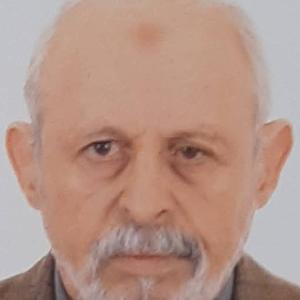
د. رجب علي المختار عيسى

رجب علي المختار عيسى هو احد اعضاء هيئة التدريس بقسم الكيمياء بكلية التربية طرابلس. يعمل السيد رجب المختار بجامعة طرابلس كـمحاضر منذ 2013-10-07 وله العديد من المنشورات العلمية في مجال تخصصه

منشورات مختارة

بعض المنشورات التي تم نشرها في قسم الكيمياء

Synthesis and antibacterial activity of some Novaj amide derivative

تحضير ودراسة فاعلية بعض المركبات الاميدية الجديدة
Asma Omar jebril (1-2012)
Publisher's website

Reversibility in radionuclide/bentonite bulk and colloidal ternary systems

Ternary systems of 152Eu(III), bulk bentonite and ethylenediaminetetraacetic acid (EDTA) ([Eu] = 7.9 × 10⁻¹⁰ M; pH = 6.0–7.0) have been studied. Without EDTA, there was slow uptake in a two-stage process, with initial rapid sorption of Eu(III) (96%), followed by slower uptake of a much smaller fraction (3.0% over a period of one month). The reversibility of Eu(III) binding was tested by allowing Eu(III) to sorb to bentonite for 1–322 days. EDTA was added to the pre-equilibrated Eu bentonite systems at 0.01 M, a concentration that was sufficient to suppress sorption in a system where EDTA was present prior to the contact of Eu(III) with bentonite. A fraction of the Eu was released instantaneously (30‒50%), but a significant amount remained bound. With time, the amount of Eu(III) retained by the bentonite reduced, with a slow fraction dissociation rate constant of approximately 4.3 × 10⁻⁸ s−1 (values in the range 2.2 × 10⁻⁸ – 1.0 × 10⁻⁷ s−1) for pre-equilibration times ≥7 days. Eventually, the amount of Eu(III) remaining bound to the bentonite was within error of that when EDTA was present prior to contact (4.5% ± 0.6), although in systems with pre-equilibration times >100 days, full release took up to 500 days. Europium interactions with colloidal bentonitewere also studied, and the dissociation rate constant measured by a resin competition method. For the colloids, more Eu was found in the slowly dissociating fraction (60–70%), but the first-order dissociation rate constant was faster, with an average rate constant of 8.8 × 10⁻⁷ s−1 and a range of 7.7 × 10⁻⁷–9.5 × 10⁻⁷ s−1. For both bulk and colloidal bentonite, although slow dissociation was observed for Eu(III), there was no convincing evidence for ‘irreversible’ binding.
RAGIAB ISSA(1-2021)
Publisher's website

MATERIALS CHARACTERIZATION BY COMBINED THERMOVOLTAIC DETECTION (TVD) AND THERMAL ANALYSIS (DTA) TECHNIQUES

The thermovoltaic detection (TVD) technique is based on measurement of the EMF generated by two dissimilar metal electrodes in contact with the specimen. This technique has recently been applied when investigating different types of materials involving thermal decomposition reactions which have more normally been studied by conventional thermal analysis techniques, such as DTA, TG, etc. This paper reports the application of the combined TVD and DTA techniques for thermal characterization of materials. The Harrop DTA system has been modified such that measurements by the two techniques can be made simultaneously in the same environment. Data have been obtained on different types of materials, e.g., NiSO,.6H,O and CoSO,.7H,O, etc., at a programmed heating rate of 10” C rnin- ‘. Results obtained by these techniques are discussed and compared with the corresponding values in the literature.
Ragiab Ali Mokhtar(5-1990)
Publisher's website