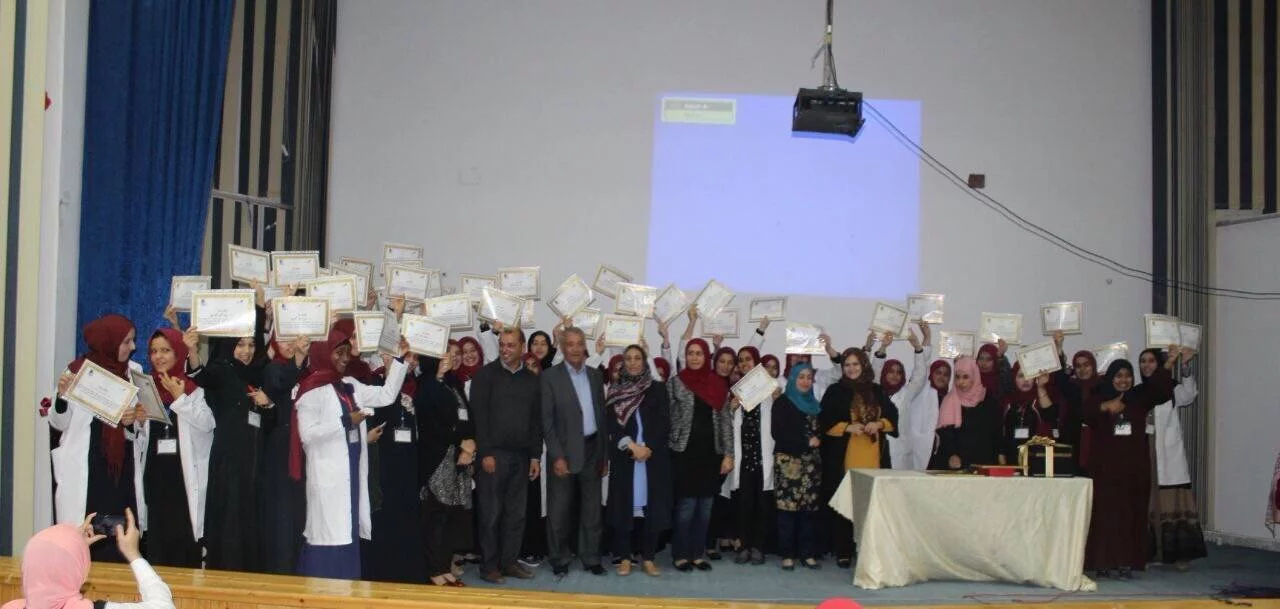
قسم الاحياء

المزيد ...

حول قسم الاحياء

قسم الأحياء هو أحد أقسام كلية التربية / طرابلس بجامعة طرابلس والـــــــــــذي تأسس سنة 2006-2005، و يتمتع قسم الأحياء ومنذ تأسيسه بسمعة علمية متميزة ضمن جامعة طرابلس. وبشكل عام فإن القسم يكرس الإمكانيات للحفاظ على أعلى مستوى علمي حيث يقوم القسم بتوفير برنامج دراسي و بحثي واسع ضمن تخصص علم الأحياء وذلك لتوفير الفرص العلمية لطلبته العازمين بجد للحصول على درجة البكالوريوس منه.  هذا بالإضافة لإنجاز العديد من البحوث العلمية في مختلف حقول علم الأحياء.

 إن المواضيع التي تدرس بقسم الأحياء تؤهل الخريجين للعمل كبيولوجيين حيثما تبرز الحاجة لهم في ميادين العمل وخاصة مجال التدريس بوزارة التربية والتعليم وكذا المجال الطبي والزراعي والصناعي. و تتضمن المقررات المعطاة المواضيع الأساسية في علم الأحياء مثل: علم الحيوان وعلم النيات و علم وظائف الأعضاء وعلم تصنيف النبات وعلم الوراثة و علم البيئة وعلم الطفيليات و علم الأجنة والعديد من العلوم الأخرى. وقد أخذ قسم الأحياء على عاتقه إعداد وتوفير احتياجات المجتمع من معلمين مؤهلين علمياً وتربوياً وفق برنامج أكاديمي متكامل يخضع للوائح وقوانين جامعة طرابلس, واللوائح الخاصة بكلية التربية طرابلس.

حقائق حول قسم الاحياء

نفتخر بما نقدمه للمجتمع والعالم

14

المنشورات العلمية

16

هيئة التدريس

299

الطلبة

0

الخريجون

البرامج الدراسية

بكالوريوس في العلوم والتربية
تخصص الاحياء

البرنامج الأساسي لقسم الأحياء متمثل في منح الطلاب المتخرجين درجة البكالوريوس، ولا يحوي قسم الأحياء إلى الآن برنامجاً للماجستير أو الدكتوراه، ومن أبرز النقاط المعتمد عليها البرنامج الدراسي (البكالوريوس) بقسم الأحياء، كالتالي:·    الدراسة بالقسم بنظام ( الفصل الدراسي) بعدد...

التفاصيل

من يعمل بـقسم الاحياء

يوجد بـقسم الاحياء أكثر من 16 عضو هيئة تدريس

staff photo

أ. سارة عبد العزيز ابراهيم بن زقلام

سارة بن زقلام هي احد اعضاء هيئة التدريس بقسم الاحياء بكلية التربية طرابلس. تعمل السيدة سارة بن زقلام بجامعة طرابلس كـمحاضر من 2018 ولها العديد من المنشورات العلمية في مجال تخصصها

منشورات مختارة

بعض المنشورات التي تم نشرها في قسم الاحياء

Hamza, A., Mamat, I. B. H., & Abdullah, M. T. (2019). Results of a seabird survey at the southern Seribuat Archipelago, Johor, Malaysia. Marine Ornithology, 47, 49-53.

Thirty-one seabird species are found in Malaysia; a few still breed on rocky outcrops and small islands in the southern Seribuat Archipelago. A century-long egg harvest by local fishermen in the area is believed to have caused extirpation of several breeding populations. To update the status of seabirds in the southern section of the Seribuat Archipelago, a two-day survey was conducted in August 2017. Twenty-two islands were selected and surveyed using boat observation and colony visits. In total, over 6 200 birds were counted, representing five tern species: Bridled Tern Onychoprion anaethetus, Black-naped Tern Sterna sumatrana, Great Crested Tern Thalasseus bergii, Roseate Tern Sterna dougallii, and the Lesser Crested Tern T. bengalensis. The first two species are confirmed breeders, whereas the remaining species are either passage migrants or unconfirmed breeders. The survey led to the rediscovery of a small population of Roseate Terns at Pulau Yu (one of the species' two historic breeding sites in Malaysia). The islands surveyed are not legally protected (except for the Pulau Tinggi group). The protection of selected sites is highly recommended to conserve these remaining seabird populations.
Abdulmula Abdumagid Alhadi Hamza(4-2019)
Publisher's website

Hamza, A., David, G., Mcafee, A., & Abdullah, M. T. (2018). Annotated checklist of avifauna in Pulau Bidong, Malaysia. Journal of Sustainability Science and Management, 13(1), 103-116.

Avian diversity study focusing on islands in Malaysia is generally scarce compared to the unsurprisingly wealth of information on mainland birds. Similarly, Pulau Bidong is one of these islands with scarce ornithological information. It is located to the northwest of Kuala Terengganu, East Coast Peninsular Malaysia. A series of field surveys were conducted on the island between August 2014 and August 2016, using both point counts and mist netting methods to assess the bird species diversity at coastal area and within the forest canopy of the island. Unpublished data from 2006 were also added as it covers the Bidong trail area. Our results indicate that the total count is 26 species, belonging to 18 families and 23 genera. This species list is not exhaustive because the survey did not cover the main migration season from October to February, when it coincides with the monsoon season and rough weather. Further surveys will be needed to cover the nearby small islands in the archipelago.
Abdulmula Abdumagid Alhadi Hamza(6-2018)
Publisher's website

Hamza, A., Hisham, A. S., Suratman, S., Bidai, J. A., & Shazili, N. A. B. M. (2021). Trace elements in feathers and eggshells of two tropical seabirds from Malaysia. Marine Ornithology, 49, 335-341.

Seabird feathers and eggshells are used as bio-monitors for trace metal contamination. Eleven trace element concentrations in wing primaries (n = 21) and eggshells (n = 8) are reported herein for two resident seabirds, Bridled Tern Onychoprion anaethetus and Black-naped Tern Sterna sumatrana, at Pulau Ling and Pulau Tokung Burung, Malaysia. Metal concentration followed the pattern Zn > Cr > Mn > Sr > Cu > Se > Ba > Pb > Cd > Ga > Li. Significant positive correlations existed among all trace metals, except for Cr in Black-naped Tern and Li and Cd in Bridled Tern feathers. We also analyzed metal concentrations in eggshells, and for Bridled Tern, the concentration pattern was Zn > Mn > Se > Sr > Ba > Pb > Co > Cu > Cd, whereas for Black-naped Tern it was Cr > Zn > Mn > Ba > Sr > Se > Cu> Co > Pb. A pairwise positive correlation was significant among most trace metals in feather samples, indicating synergistic effects of two or more elements. More studies are needed to build a baseline database of trace metal concentrations in seabirds of Southeast Asia, as little research on this subject has been conducted in this region.
Abdulmula Abdumagid Alhadi Hamza(1-2022)
Publisher's website